
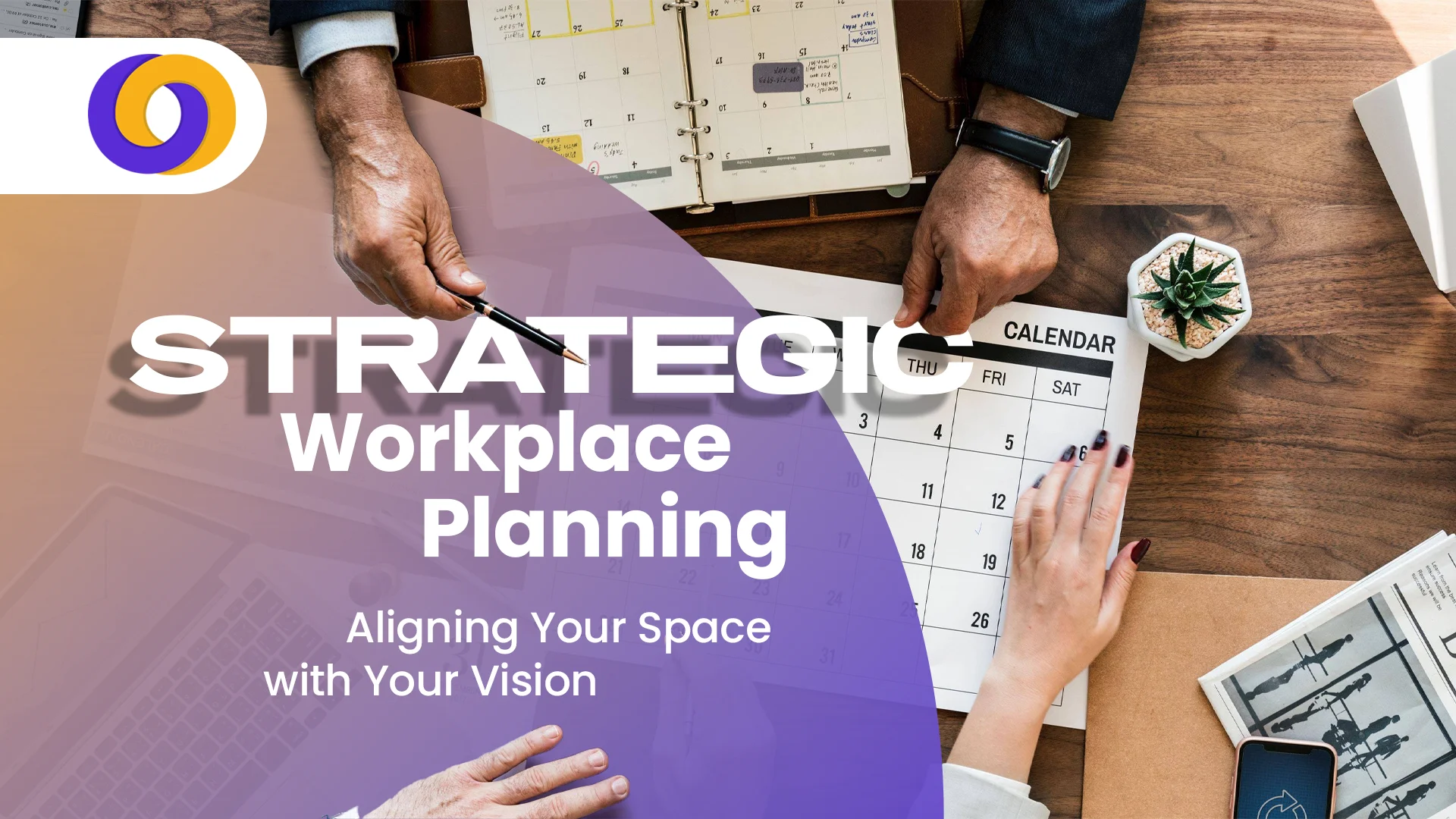
The contemporary workplace is more than just conference rooms, desks, and chairs. It is a strategic asset that can either help your company to meet its objectives or obstruct it from achieving its maximum potential. The need for deliberate workplace planning has never been so important as companies negotiate hybrid work paradigms, changing employee expectations, and competitive talent markets.
Strategic workplace planning surpasses interior design or facility management. This all-encompassing strategy matches your physical and electronic work settings with your organizational vision, culture, and operational goals. Done properly, it turns your office from a basic cost centre into a strong force of productivity, invention, cooperation, and employee satisfaction.
This blog covers how intelligent workplace planning aligns your space with your organisation’s vision.
Understanding Strategic Workplace Planning
Strategic workplace planning is the design, execution, and management of work environments directly supporting an organization’s mission, values, and long-term goals. It calls for a holistic perspective that considers cultural influences, employee needs, technology infrastructure, workplace policies, and the physical environment.
Fundamentally, this strategy asks basic questions:
- What kind of work must be accomplished?
- How most efficiently teams work together?
- What virtues do we want our area to portray?
- Top talent may be attracted and kept by our surroundings?
The answers to these questions influence judgments on office design, technology investments, placement strategies, amenity availability, and policies on flexibility. Strategic planning guarantees every decision supports a specific objective consistent with company priorities, instead of relying just on price or tradition in decisions.
1. Starting with Your Organisational Vision
Effective strategic objectives and organisational vision definition start with a thorough knowledge of your company. You must specify what you as a company are trying to accomplish and how your office can support those aims before thinking about furniture choices or floor plans.
Think about your company values as well. Open designs and glass-walled conference rooms can be accepted by an organisation that values openness. One that gives employees top priority might spend on biophilic design features, natural light, and well-being amenities. A business committed to sustainability would include ecologically conscious materials and green construction methods all around their workplace policy.
2. Assessing Your Current State
Once your vision is clear, evaluate your actual work surroundings. This evaluation establishes the starting point against which you will assess growth and pinpoint discrepancies between where you now stand and where you should be.
Studies of space use show how your infrastructure is actually used. You could find that while staff members battle to locate collaborative space or that allocated desks stay empty as they embrace flexibility, conference rooms sit empty.
Moreover, employee input offers insightful perspectives on what is and is not successful. Interviews, surveys, and focus groups reveal chances for growth, unsatisfied needs, and pain spots. Pay close attention to how staff members portray their job experiences and what would enable them to be more effective.
3. Designing for Different Work Modes
Modern labor is not homogenous. Employees use several work methods with different geographic needs. Strategic workplace design develops surroundings suited for a range of tasks.
Focused effort usually calls for privacy, suitable acoustics, and few distractions. Quiet areas, individual focus rooms, or neighbourhoods reserved for focused work with precise guidelines about noise could all be included in strategic plans.
From impromptu conversations to formal gatherings to major seminars, collaboration comes in several varieties. Effective techniques provide a range of cooperation spaces sized for various group sizes: huddle rooms, project rooms, casual lounge areas, and technology-enabled meeting rooms.
4. Technology as an Enabler
Technological structure is as vital as walls and windows. Flexible support for distributed teams and flawless work experiences independent of geography are made possible by strategic integration.
Solid connectivity is fundamental; dependable Wi-Fi across your workplace guarantees workers can work efficiently from wherever within. Hybrid meetings wherein remote and in-office attendees have equal experiences are made possible by video conferencing technology.
The technology strategy has to cover home and mobile working settings as well. Offering employees suitable tools and safe connectivity for remote work is currently a basic element of workplace strategy.
5. Sustainability and Long-term Thinking
Environmental, social, and economic sustainability must be considered when creating strategic workplace plans. Prioritising short-term cost reductions over long-term performance is neither strategic nor sustainable.
Environmental sustainability includes energy efficiency, waste reduction, sustainable materials, and carbon footprint reduction. These factors impact regulatory compliance, brand reputation, and employee attraction. Frameworks for attaining environmental performance are provided by green building certifications.
Social sustainability aims at developing communities and workplaces that embrace wellbeing, equality, inclusivity, and community. This involves guaranteeing access, designing environments fit for many work types, and building inclusivity for every worker.
Final Thoughts
Strategic workplace planning fundamentally changes how one sees workspace—from a commodity to a strategic asset able to generate competitive advantage. Your office becomes a strong tool for attracting talent, enabling productivity, encouraging innovation, and developing culture when it is carefully matched with your organizational vision, values, and goals.
The most successful workplace tactics balance several factors: employee needs, company goals, financial limitations, technological capabilities, and future flexibility. They understand that there is no one-size-fits-all solution and that the best workplace has to be deliberately built to assist your own vision.
Workplace planning will only grow in value as the nature of labour changes. Businesses that invest in fitting their work environments to their strategic goals would be better able to adapt, compete, and flourish.
Frequently Asked Questions
How often should we update our workplace strategy?
At minimum once every year, workplace strategy should be reviewed. As needed throughout the year, little modifications should be made. Usually, every three to five years or when important corporate events such as mergers, fast expansion, or business model changes happen, major revisions are made.
What's the typical budget allocation for strategic workplace planning?
Although the budget distribution depends greatly on scope, most companies spend 5–15% of the entire real estate and facilities budget on workplace strategy projects. Initial strategic planning and design may comprise a bigger one-time expenditure, whereas continuing optimisation and adaptation call for little ongoing small expenditures.
How do we balance employee preferences with business needs in workplace planning?
While maintaining perfect alignment with corporate goals, the most successful approach calls for gathering thorough employee feedback via surveys, focus groups, and pilot projects.

0 Comments