
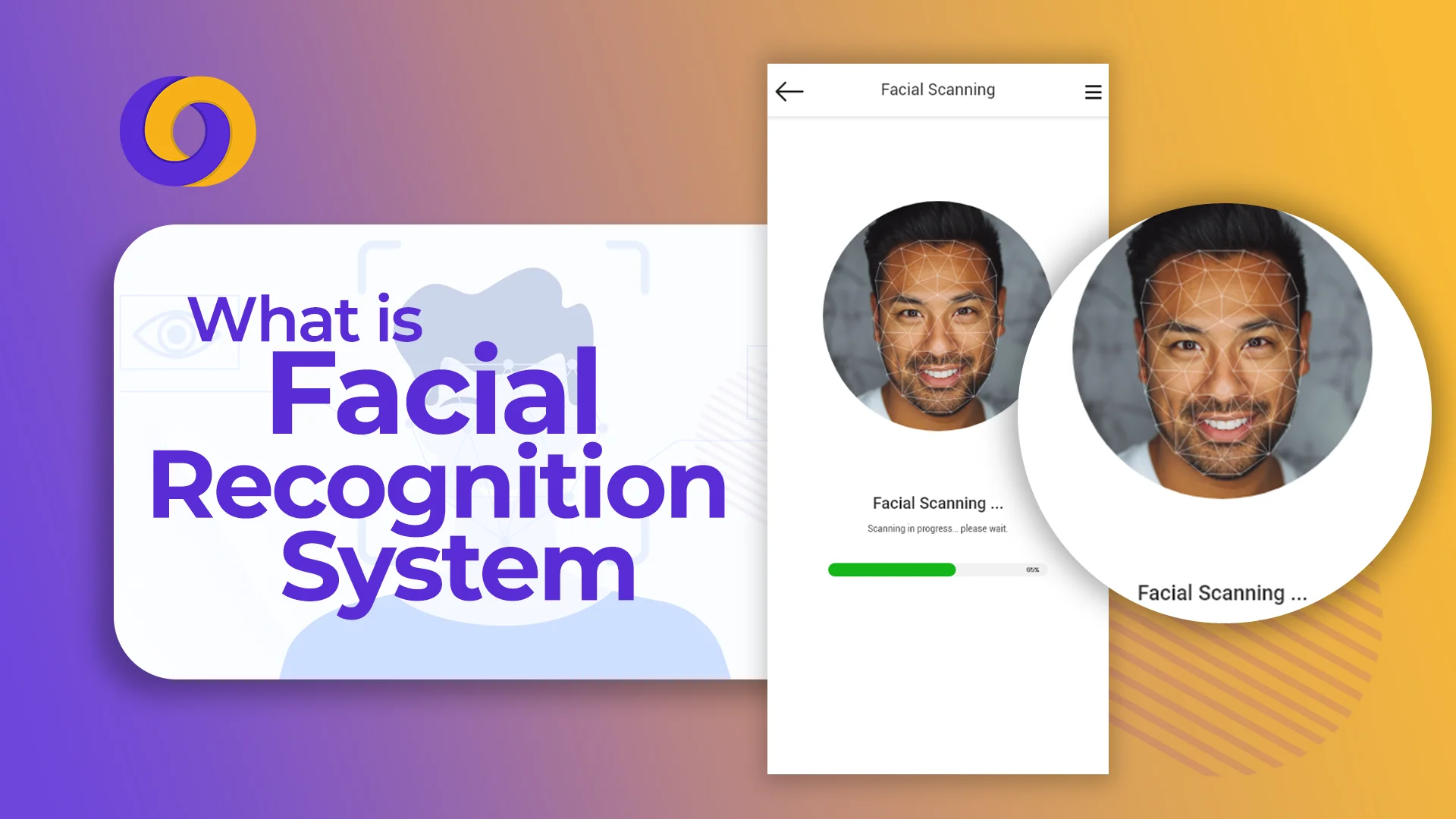
Forget passwords, keys, and cards. The most secure key you possess is one you were born with and carry everywhere: your face. Facial recognition technology is rapidly shedding its sci-fi skin to become the cornerstone of modern security. But is it a guardian of safety or a gateway to surveillance?
This guide cuts through the hype to explore how it works, why it’s transformative, and the critical balance we must strike for its future.
What is Facial Recognition?
Fundamentally, a facial recognition system is a type of biometric artificial intelligence. By examining and matching patterns derived from a person’s facial contours, features, and structure, it is a technology able to confirm or establish their identity.
Unlike basic photo matching, contemporary technologies produce a mathematical, digital model based on the geometry of your face known as a unique facial signature or faceprint. This converts your biological identity into a safe, encrypted data template.
The way from a face to a safe access grant is a complex, multi-stage technological pipeline:
Face Detection
The system first locates and isolates a human face within a digital image or live video feed, filtering out background noise. This is typically powered by machine learning models trained on vast datasets.
Face Analysis & Feature Extraction
Facial geometry is then mapped by the machine through face analysis and feature extraction. It calculates and measures the spatial relationship between important nodal points like the distance between your eyes, the depth of your eye sockets, the breadth of your nose, the curve of your cheekbones, and the outline of your lips. This forms your own numerical faceprint.
Faceprint Conversion & Storage
The examined picture is transformed into a unique digital template via faceprint conversion and storage. This is, in secure systems, an encrypted string of numbers that cannot be reverse-engineered into an image rather than a stored image.
Matching & Verification/Identification
This is the decision juncture: matching and verification/identification.
- Verification (1:1 Matching): “Does this person match the claims they make?” The system matches the recorded faceprint against a single stored template connected to a claimed identity (for example, opening your phone).
- Identification (1:N Matching): “Who is this person?” To look for a probable match (e.g., locating a suspect in a throng), the system compares the captured faceprint against a whole template database.
The “Smart” in Smart Security: Transformative Applications
The strength of face recognition is its seamless, non-contact, extremely precise character. Its applications are already revolutionizing security paradigms:
- Physical Access & Time & Attendance: One of the fastest rising business applications is physical access, time, and attendance. Facial recognition systems protect sensitive locations, gates, and doors by taking the place of keycards, PINs, and fingerprint sensors. Together with time and attendance solutions like the one Smart Workforce provides, it guarantees audit-proof attendance records and accurate payroll and offers a contactless, sanitary check-in/check-out procedure. It records arrivals, breaks, and departures automatically with auditable evidence.
- Law enforcement and public safety: It is employed to identify people in real-time at borders or airports, find missing people, and compare faces from crime scene film to databases of known criminals. Although strong, this program is at the centre of intense moral discussions about privacy and surveillance.
- Consumer Electronics & Personal Security: Most often seen consumer-facing applications include opening your laptop or phone. With a degree of simplicity and security that passwords have trouble matching, it also protects personal data and digital payments.
- Retail & Fraud Prevention: High-end merchants use it to detect known thieves upon arrival. Banks use it to confirm customer identification for major transactions, thus fighting identity theft.
- Healthcare & Secure Access: It can restrict access to pharmacies, neonatal wards, or patient records in hospitals, so guaranteeing only authorised personnel penetrate vital locations.
Power, Ethics, and Limitations: The Critical Balance
Navigating its significant hurdles will determine facial recognition’s future:
- The Privacy Paradox: The basic issue is the possibility of mass surveillance and anonymity’s degradation in public areas. This is when data collected for secure access is later used for unauthorized employee productivity monitoring. Major societal hazards are the unauthorized building of faceprint databases and function creep—using data beyond first permission.
- Bias and Accuracy: Early systems revealed concerning racial and gender bias, with more mistake rates for women and persons of color. Although more varied training datasets have greatly improved accuracy, ethical application demands ongoing monitoring for bias. Performance is also impacted by elements including age progression, stance, accessories (glasses, masks), and lighting. Therefore, continuous auditing for bias isn’t just technical—it’s an ethical imperative for fair deployment
- Regulation & Compliance: The legal terrain is struggling to keep pace. The EU’s AI Act suggests severe restrictions on real-time public facial recognition. Arguments over its correct application still rage in the United Kingdom. Organizations must therefore plan a patchwork of regulations, ensuring their use cases are lawful, proportionate, and transparent to maintain public trust.
Final Thoughts
A facial recognition system is a highly effective tool—a technological mirror of our own natural capacity to know one another. With its unrivaled mix of convenience, correctness, and integration possibilities, its categorization as the future of smart security is well-earned.
Its future has to be assured, moral, and controlled, though. The impact of the technology itself is determined by the intentions, safeguards, and transparency of those using it.
For companies, especially those involved in staff management, it provides a transforming approach towards integrity, safety, and efficiency. Selecting solutions that give privacy, accuracy, and compliance top priority turns a strong capacity into a reliable, daily asset.
For businesses ready to harness this technology responsibly, the choice of partner is critical. Facial Recognition Attendance System of Smart Workforce is engineered with this balance in mind—delivering the efficiency of contactless, fraud-proof time tracking on a foundation of ethical data use and robust security.
Ready to See It in Action? Book a Demo
Frequently Asked Questions
Is facial recognition attendance safer than fingerprint scanners?
In several ways, yeah. It is contactless, more sanitary, more difficult to create and does not leave a physical marker like a fingerprint residue. Additionally, it solves problems related to fingerprint readability caused by manual labour or dry skin.
Can facial recognition work in the dark or if I wear a hat?
Yes. Advanced systems use infrared or 3D mapping to work effectively in low-light conditions. While heavy or consistent obscuration of the face can challenge any system, modern algorithms are highly robust and can often verify identity even with everyday accessories like glasses or hats.
What happens to my facial data in a workplace system?
Your facial data is encoded and kept as a proprietary numerical template in a properly designed system such as Smart Workforce rather than as a storable image. Kept on safe servers (or locally on the device), used only for verification purposes, and never given or sold. You should provide clear consent and always be aware of the data policy.

0 Comments
Trackbacks/Pingbacks