
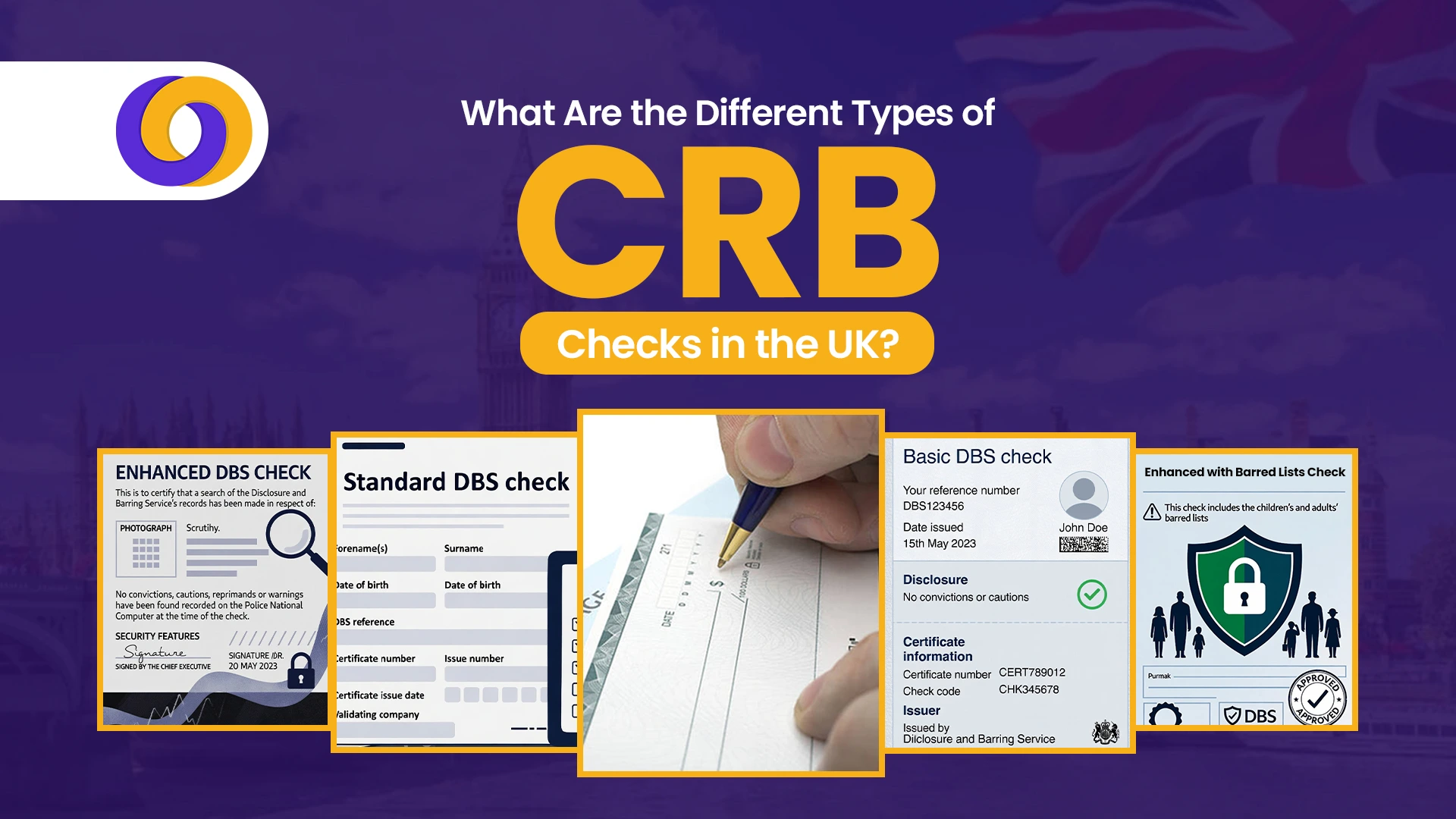
CRB checks have probably come your way if you’re looking for someone in the UK who demands trust, safety, or accountability. Here is the first important point: the CRB (Criminal Records Bureau) was superseded in 2012. The Disclosure and Barring Service, or DBS, is its contemporary successor. Understanding the authorized forms of DBS checks is critical for legal compliance and efficient safeguarding, even if several people still use CRB casually.
CRB checks cannot be handled one-size-fits-all. Not performing the proper check can expose your company to intolerable risk; requesting the wrong degree can be prohibited.
This guide explains the four different levels of inspections, their objectives, and how to negotiate the system with assurance.
Different Types of CRB Checks
The UK’s DBS system is designed to be proportionate. The level of disclosure escalates with the level of trust and responsibility inherent to a role. Here is a breakdown of each type.
1. Basic DBS Check
This is the most fundamental level of criminal record disclosure.
What it reveals: Only unspent convictions under the Rehabilitation of Offenders Act 1974.
Who can apply? Unlike other checks, any individual can apply for a basic check on themselves directly via the government website. Employers can also request it for a prospective employee, provided they have the candidate’s consent.
Typical Use Cases: While not a legal requirement for any specific role, it’s commonly used to demonstrate trustworthiness in sectors like:
- Construction (particularly for site access).
- Logistics and delivery drivers.
- Roles in finance where a basic level of due diligence is expected.
- Personal employers (e.g., for a nanny or carer).
Key Point: It is not a substitute for a Standard or Enhanced check where one is legally required.
2. Standard DBS Check
Reserved for particular jobs and roles specified in law, this check is a step up.
What it reveals: Both spent convictions, unspent convictions, warnings, reprimands, and final warnings.
Who can apply? Only if the position is designated as suitable under the Rehabilitation of Offenders Act 1974 (Exceptions) Order 1975, a prospective employer or licencing organisation can apply on behalf of a candidate. The person cannot seek this check on their own.
Typical Use Cases: Roles demanding a lot of trust include:
- Solicitors, attorneys, accountants.
- Some jobs in financial services industry (e.g., FCA-regulated duties).
- Security officers, such SIA licence applicants.
- Particular roles in the penitentiary service.
Key Point: The choice to employ someone with a criminal history revealed on a Standard check is based on a reasonable risk analysis. A conviction does not necessarily prohibit employment.
3. Enhanced DBS Check
A vital protection measure, this is the most thorough kind of inspection.
What it reveals: All in a standard check, plus any other pertinent data local police agencies have. This might include soft intelligence, charges, or other material deemed relevant to the role.
The Barred Lists Check: Enhanced checks for jobs requiring controlled interaction with children or vulnerable adults may also entail a DBS Barred List search on one or both lists. These lists include the names of people legally restricted from working in such positions.
Who can apply? Only an employer or licensing authority for an allowable position as defined in law.
Typical Use Cases: Any position involving immediate, unsupervised care of vulnerable populations:
- Childminders, teaching assistants, and teachers.
- Carers, healthcare experts, and social workers.
- Sports coaches for children as well as youth workers.
Key Point: A barred person applying for and an employer employing them into a position from which they are barred is a criminal crime.
4. Enhanced with Barred Lists Check
The most detailed; includes everything in an Enhanced check, plus whether the individual is on the list of people barred from working with children or vulnerable adults (adult first list).
Used For: Positions requiring contact with vulnerable populations, like teachers, nurses, or care workers.
Key Point: While called CRB checks historically, they are now handled by the Disclosure and Barring Service (DBS), hence “DBS checks”. Standard, Enhanced, and Enhanced with Barred Lists checks are usually requested by employers, while individuals can request Basic checks themselves.
Choosing the Right Check
Selecting the correct check is a legal obligation. Follow this simple decision process:
- Does the role involve regulated activity with children or vulnerable adults?
- YES → You must request an Enhanced DBS check with the relevant Barred Lists.
- Is the role listed in the Rehabilitation of Offenders Act Exceptions Order? (e.g., lawyer, accountant, certain regulatory posts).
- YES → You are eligible to request a Standard DBS check.
- Is the role none of the above, but you want a basic level of due diligence?
- YES → You can request or suggest a Basic DBS check.
Crucial Reminder: You cannot “upgrade” for peace of mind. Requesting a higher level of check than the role is eligible for is a violation of the DBS Code of Practice and data protection law.
Beyond the Certificate: The Employer’s Ongoing Duty
Receiving the DBS certificate entails that you are now responsible for taking certain steps.
- Verify the Original Certificate: Do not forget to check the original document.
- Conduct a Fair Risk Assessment: If the check turns up information, evaluate its relevance, gravity, and recency in the context of the specific role.
- Consider the Update Service: Through a yearly subscription of only £13, candidates have the option to join the DBS Update Service. Employers will then be able to carry out an instant online verification of their status, which, in turn, can facilitate hiring for positions that involve regular background checks.
Final Thoughts
The comprehension of various types of crb checks is a prerequisite to establishing a safe and compliant workforce. The transition to the stricter “CRB” nomenclature from Basic, Standard, Enhanced, and Enhanced with Barred Lists levels guarantees that you exercise the appropriate amount of caution for the corresponding role.
This accuracy not only secures the rights of powerless people but also enlivens the credibility of institutions and protects your organization from legal and reputational harms. The power of knowledge in the system of safeguarding is your first and most potent line of defence.
Book a free demo today to try our BS7858 staff vetting feature.
Frequently Asked Questions
What’s the difference between a "CRB" and a "DBS" check?
The CRB (Criminal Records Bureau) and its counterpart for vulnerable adults, the ISA, were merged in 2012 to form the DBS (Disclosure and Barring Service). “CRB check” is now an outdated term, though still widely used. All modern criminal record checks are DBS checks.
Can I use an old CRB certificate for a new job?
Generally, no. A DBS certificate has no official expiry date, but it is only a snapshot of the person’s record on the day it was issued. Most employers will have a policy requiring a new check, typically every 1-3 years, to fulfill their ongoing duty of care.
How long does a DBS check take to process?
Basic checks are often completed within 48 hours. Standard and enhanced checks vary significantly, typically taking 2-8 weeks. The delay is often due to the manual checking of local police records, which depends on individual force backlogs.

0 Comments