
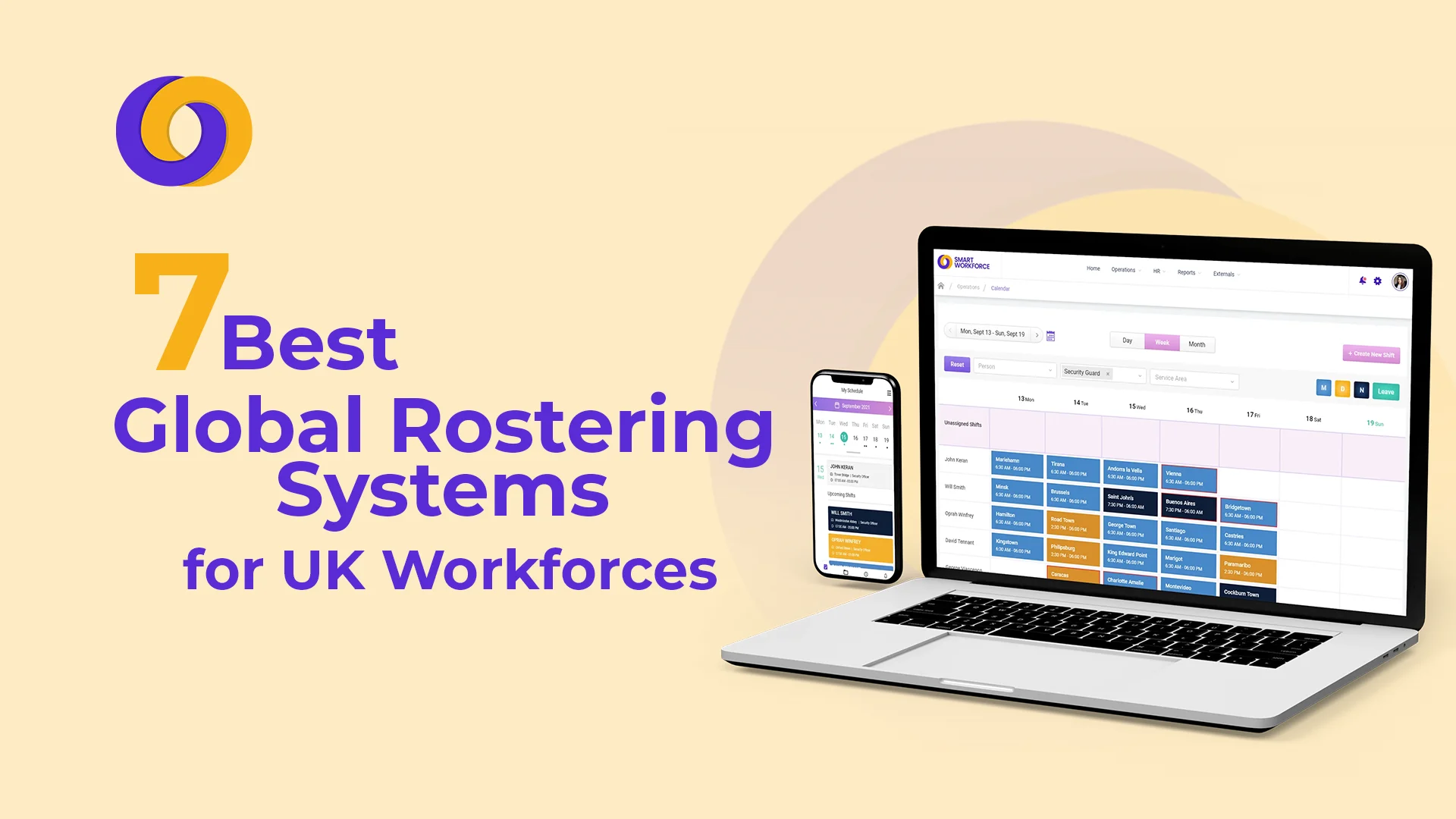
One of the most difficult problems confronting UK companies in 2026 is managing shift schedules over several sites, time zones, and regulatory jurisdictions.
The right global rostering system can change chaos into coordination whether you’re arranging field service technicians across the country, overseeing retail teams in hundreds of outlets, or coordinating healthcare personnel across hospital trusts.
Exploring their features, advantages, and intended uses, this comprehensive guide reviews the seven top global rostering system apps accessible to UK companies in 2026 so that you may make an informed choice.
What is a Global Rostering System?
Designed to automatically maximise and administer employee scheduling across many sites, departments, and time zones, a global rostering system is a comprehensive software. Incorporating complex algorithms that balance business needs, employee preferences, regulatory compliance, and operational restrictions, these systems go well beyond simple calendar management.
Linking scheduling with time and attendance monitoring, payroll processing, compliance management, and workforce analysis, modern GRS systems act as the central nervous system for employee deployment. They give managers the ability to react fast to shifts and enable employees to have more power over their work schedules by providing real-time visibility into staffing levels.
Key Functions of Global Rostering Systems
Here are the five important features of an advanced GRS:
1. Automated Schedule Generation
Advanced GRS systems automatically produce the best timetables using AI algorithms depending on several factors: demand forecasts, employee availability, skill demands, labour budgets, and compliance standards. Instead of working for many hours painstakingly creating rosters, managers may create compliant, effective schedules in minutes with systems that learn from past trends and constantly refine advice.
2. Multi-Location and Time ZoneManagement
For companies with several locations, GRS offers consistent visibility and control. Managers may simultaneously see staffing throughout all sites, move employees as necessary, and guarantee uniform scheduling policies while honouring regional laws and time zones. With this centralised coordination, the inefficiencies of operating several different systems are reduced.
3. Regulation Management and Compliance
Working Time Regulations, UK employment law, and industry-specific demands produce intricate compliance requirements around rest periods, maximum hours, break entitlements, and record-keeping. Directly into scheduling logic, quality GRS systems automatically flag possible infractions before rosters are released and keep thorough audit trails for regulatory audits.
4. Employee Self-Service and Shift Management
Through web portals and mobile applications that enable employees to see schedules, seek time off, trade shifts with coworkers, declare availability preferences, and get rapid notifications on schedule changes, modern rostering systems empower them. This self-service feature enables workers to have more independence and balance their job and personal life while lowering the administrative burden for managers.
5. Real-Time Reporting and Analytics
Complex reporting tools convert scheduling information into strategic ideas. GRS systems offer information on labour expenses, overtime trends, schedule adherence, employee utilisation rates, and patterns of productivity. These ideas show adherence with employment laws while also facilitating data-driven decision-making regarding staffing levels, budget allocation, and operational improvements.
Advantages of GRS
Discussed here are some benefits of a global rostering system:
1. Significant Labour Cost Reduction
Good scheduling guarantees the right number of appropriately skilled employees are scheduled when necessary, lowers overtime costs, and lowers overstaffing. Through better demand forecasting, improved schedule efficiency, and eradication of scheduling mistakes that cause premium pay scenarios, organisations often cut labour expenses by 5–15%.
2. Increased Risk Mitigation and Compliance
Automated compliance checking keeps holiday entitlements, guarantees adequate rest periods, prevents breaches of Working Time Regulations, and maintains full audit logs. This defends the company in employment conflicts, lowers legal liability, and helps to prevent regulatory infraction penalties. Knowing schedules are consistent offers priceless peace of mind.
3. Greater Employee Retention and Satisfaction
Employees who may readily ask for time off, switch shifts with coworkers, and signal preferences well in advance improve satisfaction significantly. Studies indicate that businesses with good rostering systems have a 20–30% drop in schedule-related employee complaints and better retention rates as staff members value the openness and flexibility.
4. Time Savings and Operating Efficiency
Managers save 50–75% of the time once devoted to scheduling, processing shift swaps, managing time-off requests, and fixing scheduling errors. This recovered time could be channelled toward strategic planning, coaching teams, and the enhancement of service quality. Administrative employees devote less time to payroll reconciliation and compliance paperwork.
5. Better Business Outcomes
Customer service rises, productivity rises, and income grows when the correct staff with the appropriate skills are scheduled at the appropriate periods. Retailers prevent lost revenues from understaffing in peak times. Healthcare institutions keep correct employee ratios. Service companies honour SLA promises. Directly affecting bottom-line results are the operational benefits of improved rostering.
The Best GRS for UK Workforces
Now, we’ll discuss the top 7 global rostering systems best suited for UK workforces:
1. Smart Workforce
Smart Workforce is a comprehensive workforce management system designed particularly for UK companies with sophisticated rostering capabilities. In one seamless platform, the system brings together smart scheduling, time and attendance monitoring, leave management, and staff vetting, among others.
Key Features
- Learns from past trends for advanced, artificial intelligence-powered timetable optimisation
- Complete UK compliance includes automated working time restrictions.
- Intuitive mobile application for employee self-service and real-time scheduling visibility
- Smooth payroll system and HR platform integration
- Facial identification attendance for confirmed time tracking
- Outstanding UK-based customer service with thorough knowledge of local needs
Best For: UK companies of all kinds looking for an all-encompassing, locally-supported workforce management solution with robust compliance capabilities and a straightforward user experience.
2. Deputy
Popular worldwide rostering tool Deputy is especially used in the retail, hospitality, and medical industries. Famous for its user-friendly interface and rapid implementation, Deputy offers excellent core scheduling capabilities with strong mobile capabilities.
Key Features
- Easy-to-use interface hardly requiring any instruction
- Strong demand prediction based on historical patterns and sales data
- Integrated time and attendance with several clock-in methods
- Broad market linking to business systems, payroll, and POS
- Real-time labour cost monitoring and budget management
Best For: Small to mid-sized retail, hospitality, and service companies putting ease of use and rapid deployment first.
3. Rotaready
Rotaready is a UK-based rostering tool especially strong in compliance management and complicated shift patterns. For companies with complex rostering needs, the platform provides advanced scheduling logic.
Key Features
- Great management of intricate shift patterns and rotating rules
- Powerful compliance system with thorough coverage of UK employment law
- Effective template and pattern control for repeating calendars
- Complete reporting and employee statistics
- Personalized support for the medical and care industries
Best For: Healthcare trusts, care providers, and companies with challenging shift patterns needing advanced compliance management.
4. Humanity(now TCP)
With an emphasis on employee involvement and schedule optimization, Humanity presents enterprise-grade rostering. Suitable for big companies, the platform offers advanced forecasting and analysis tools.
Key Features
- Advanced demand prediction using several data sources
- Notable employee engagement characteristics including shift market
- Managers’ and staff members’ thorough mobile experience
- Reliable API for custom integrations
- Multi-site management with centrally visibility
Best For: Medium to large firms requiring sophisticated forecasting, multi-site management, and extensive integration features.
5. Planday
Planday is a European scheduling tool with a significant UK market share, especially in the sectors of hospitality, retail, and service. The platform combines ease of use with a range of options pretty well.
Key Features
- An interface that’s both sleek and modern, not to mention a great mobile experience
- Team communication tools for messaging and announcements built right in
- Good features for payroll and labour cost management
- Simple-to-use time and attendance tracking
- A powerful partner ecosystem for payroll and HR integrations
Best For: Small to medium-sized businesses in hospitality, retail, and service sectors that want to enjoy the advantages of both functionality and simplicity at the same time.
6. Quinyx
Quinyx is a platform that covers all the aspects of workforce management and has strong AI capabilities as well as forecasting tools. The system caters to organizations whose demand is variable and scheduling is complex.
Key Features
- An AI-based forecasting that is very sophisticated and gets better with every use
- Mobile-first design that is excellent for the frontline workforce
- Srong task management and integrated scheduling
- Wide-ranging reporting and business intelligence
- Good support for retail and hospitality
Best For: Retail chains, hotel groups, and service companies that have changing customer patterns. Thus, having the ability to do advanced forecasting.
7. Workforce.com
Workforce.com is an enterprise-level tool that provides management of workforces with a striking emphasis on compliance and analytics and an amazing capacity for rostering. It is best suited for large companies that have very complicated requirements.
Key Features
- Powerful tools for compliance management across many locations
- Innovative analytics and forecasting of staff needs
- Effective management of tasks and projects along with scheduling
- Top-notch security and infrastructural support for enterprises
- Wide range of customization options
Best For: Large companies that have complicated compliance needs, operate in several countries, or require highly tailored scheduling.
Choosing the Right Global Rostering System
The process of choosing the correct GRS for your company is one that must be done very carefully by looking into your needs, restrictions, and what you really value most. These are the most important factors to think about:
- Size and Complexity of the Organization: What works perfectly for 50 employees might not work at all for 5,000. On the other hand, enterprise platforms can be too much for small departments. Choose the sophistication of the system according to your actual complexity.
- Industry Requirements: Healthcare has entirely different demands on the roster than retail does on the schedule. Select the systems that are already successful in your industry and that have built-in knowledge of the difficulties your industry faces.
- Regulatory Compliance Needs: In case compliance with rules and regulations is a must-have (healthcare, transport, security), make a priority of the systems that have extensive compliance engines and excellent auditing capabilities.
- Integration Requirements: Think about the systems you are supposed to link up—payroll, HR, access control, and POS systems. Look at integration a bit more closely, as you can end up with a lot of manual work and data mismatch if the integration is not well done.
- User Experience: A good system is one that people actually use. Give priority to user-friendly interfaces, especially those that belong to employees, when it comes to adoption since it is the factor that decides success.
- Budget and ROI: Think of the total cost of ownership, which includes implementation, training, and ongoing support. Calculate your expected ROI through labour cost savings, efficiency gains, and reduced compliance risk.
- Support and Service: It can be very helpful to have UK-based support that understands local employment law and business practices, especially during implementation and when problems arise.
Final Thoughts
The right global rostering system changes workforce management from being an administrative burden to a strategic advantage. No matter if you pick any of the above-mentioned platforms, investing in the right rostering technology yields measurable results in the form of decreased labour costs, increased compliance, greater employee satisfaction, and improved operational outcomes.
Consider the alternatives that are shown here. Weigh them against your distinct necessities. Ask for demos from the vendors that have made it to your shortlist. Consulting reference customers from your sector. Finally, pick the system that suits your company’s vision and operational needs the best.
The future of workforce management is smart, automated, and focused on employees. Hence, your rostering system should reflect that reality.
Frequently Asked Questions
How long does it typically take to implement a global rostering system?
The time it takes to implement the project depends on the size and complexity of the organization, but it usually takes 4-12 weeks for small and medium businesses and 3-6 months for large companies.
Can global rostering systems integrate with our existing payroll and HR systems?
Absolutely, today’s GRS software consistently provides extensive integration options via APIs, pre-made connectors, and integration services. Most of the top systems are flawless in their integration with the leading UK payroll providers (Sage, Xero, ADP, etc.) HR systems (for example, BambooHR, Breathe HR, Workday, etc.).
What ROI can we expect from implementing a global rostering system?
Companies commonly see the return on investment in the period of 6-12 months via different streams of value. A decrease in labour cost by 5-15% results from the use of better schedules, less overtime, and no overstaffing.

0 Comments