
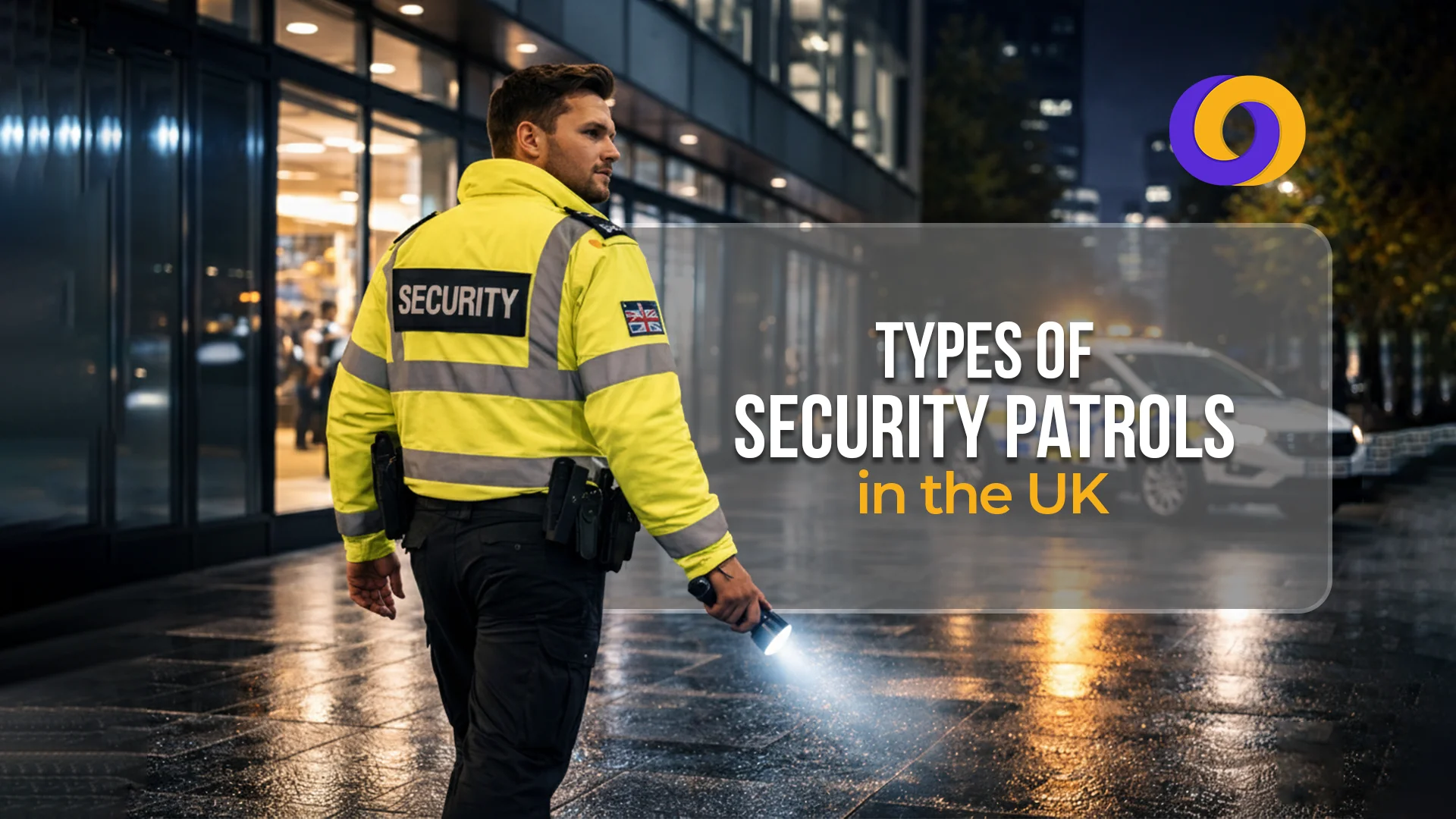
At 2:47 a.m., a motion sensor warned the remote monitoring facility of motion behind a closed retail mall. A mobile patrol crew arrived on site within minutes to find an unlocked fire escape and a trespasser trying to gain entry. The fast, organized reaction averted a major loss—not only of inventory but also of company image and client trust.
Every evening over the UK, this scene unfolds, raising a serious question: Which kind of security patrol most fits a given environment? Not every security monitoring solution fits one size.
Every approach has a different function, from the silent alertness of AI-powered cameras to the obvious foot patrol. Any corporate executive, facilities manager, or security specialist given the responsibility of protecting people and property must understand these possibilities.
What Is Security Patrolling?
To prevent criminal activity, identify security breaches, and guarantee the safety of people and assets, security patrolling is the methodical physical or technical examination of a location. Unlike static guarding, which requires staying at a defined post, patrolling is essentially moving and proactive.
It lets security staff find dangers, confirm doors and windows are closed, and keep a clear deterrent against possible intruders by planned or spontaneous movements throughout assigned locations.
Good patrolling turns security from a passive presence into an active, dynamic defence. Always looking for deviations and responding in real time, it is the eyes and ears of a firm.
Types of Security Patrols in the UK
The variety of security patrols is several, as they cater to various operational and environmental requirements. The most frequently used types of patrols in the UK security are as follows:
1. Foot Patrols
Security personnel use foot patrols as their most basic and noticeable method for securing locations. Security officers perform physical security checks by walking through shopping centres, hospitals, and corporate offices to inspect doors and windows and secure areas.
The patrols provide security officers with clear visibility and complete site observation, helping them detect small changes in the area that security technology fails to identify. The spaces require their presence because of their special need for a protective security person who provides comfort to all visitors.
2. Mobile Patrols
Mobile patrols serve as the main security solution for businesses that operate across large industrial sites, retail parks, and construction sites. The patrol guards use their marked vehicles to patrol at both random and scheduled times, which creates a visible security presence that operates without a fixed timetable.
The element of surprise is key; criminals cannot easily predict when a patrol will pass, making them significantly less likely to attempt a breach.
3. Security Patrols
Security systems’ failure to protect against threats depends on their ability to create predictable patterns. The patrols stay away from fixed routes and stable times, which helps protect security areas from unauthorized access by intruders who want to learn about patrol patterns.
Patrols use this operation model because it creates an atmosphere of patrol uncertainty, which prevents theft and trespassing at the facility. Security personnel use foot and vehicle patrols, which they combine with electronic tour verification systems for their patrol duties.
4. Canine Patrols
The combination of a handler and a trained security dog creates one of the strongest security systems that exists today. The presence of canine patrols enables better detection abilities because dogs can find concealed people and drugs and explosives, which humans cannot detect.
The security team uses these devices in expansive outdoor areas and transportation centres and facilities that require both maximum detection and security presence.
5. Keyholding & Alarm Response
Security personnel need to respond when an intruder alarm sounds during non-business hours. Security officers who possess building keys work as keyholding and alarm response patrols to inspect sites for security breaches and secure areas that require police contact.
This service provides essential support to businesses that need emergency help during non-business hours but want to avoid police penalties for false alarms.
6. Electronic Tagging Patrols (iButtons / NFC)
The documentation process for patrol activities has always been a difficult task. Electronic tagging systems use iButton or NFC checkpoints placed at strategic locations around a site. Guards use their smartphones or readers to scan each location, which automatically shows their present position and time.
The system generates an unchangeable record of patrol paths, which demonstrates that all areas of the site have been visited by security personnel. The system enables managers to observe compliance in real time while they modify patrol routes in response to actual conditions.
7. AI & Remote Patrols
The cutting edge of security patrolling. AI-powered CCTV systems continuously monitor live video streams to identify suspicious activities, which include loitering, climbing fences, and vehicle idling. The system uses threat detection to activate audible alarms and secure entrance points and notify the central monitoring station.
Furthermore, the trained operators assess the current situation while using speakers to communicate, and they can send physical units when necessary. The virtual patrol system provides organizations with a cost-effective solution that can operate at all times without experiencing operator exhaustion.
The Role of Technology in Modern Security Patrolling
Patrolling has evolved into an intelligent operation that relies on data because of technological advancements.
Real-Time Tracking & GPS
The digital map system allows managers to track both patrol vehicles and officers in real time, which helps them monitor operational areas and move officers to different locations during emergencies.
Digital Proof of Patrol
The use of electronic tagging together with mobile applications eliminates the traditional “paper round” method, which creates unbreakable proof that patrol checks were done according to standards.
Automated Reporting
The system automatically generates professional reports from patrol data which includes incidents and hazards and route completion activities, helping to reduce time spent on administrative tasks.
AI Threat Detection
The smart cameras for your site create a baseline of normal site activity, which enables them to identify suspicious behaviour that requires immediate action.
Integrated Communication
The unified platforms enable guards and control room staff and mobile supervisors to communicate through instant messaging and share photos and coordinate their response efforts.
Final Thoughts
Understanding your unique risks will help you to select the appropriate security patrol plan. While a sprawling logistics facility demands layered defence of mobile units, canine teams, and artificial intelligence monitoring, a tiny boutique may only require sporadic foot patrols and alarm response.
Most successful security procedures depend on several approaches rather than one. They combine visible and secret, physical and electronic, and expected and random. Knowing the range of patrol options offered will enable UK companies to create a strong, smart security posture protecting what matters most—day and night.
Make sure every patrol helps. With the guard patrol system of Smart Workforce, you have a complete view of your guard activity. Track GPS sites, validate QR/NFC checkpoints, keep an eye on lone worker safety, and create automated client reports—all from one comprehensive, user-friendly dashboard.
Book a demo right now to see how Smart Workforce improves security patrols.
Frequently Asked Questions
What is the most effective type of security patrol?
There is not one most efficient patrol. Your risks and location define your effectiveness. A layered strategy including high-visibility foot/mobile patrols with unpredictable random checks and secret AI monitoring offers the strongest, most resilient security posture for greatest deterrence.
How often should security patrols be conducted?
Frequency is determined by risk evaluation. While lower-risk locations might be well guarded with random patrols 2-4 times each evening, high-crime zones or sites with valuable assets could call for many patrols per hour. To find the best frequency, a professional security company should do a complete site evaluation.
Can electronic tagging replace physical supervision of guards?
No. Not a replacement for management, electronic tagging is a means of verification. For accountability, it helps to show a guard was present at a checkpoint at a certain time. Real-time GPS tracking, random location checks by managers, and performance evaluations, however, should be used with box-ticking to guarantee real alertness.

0 Comments