
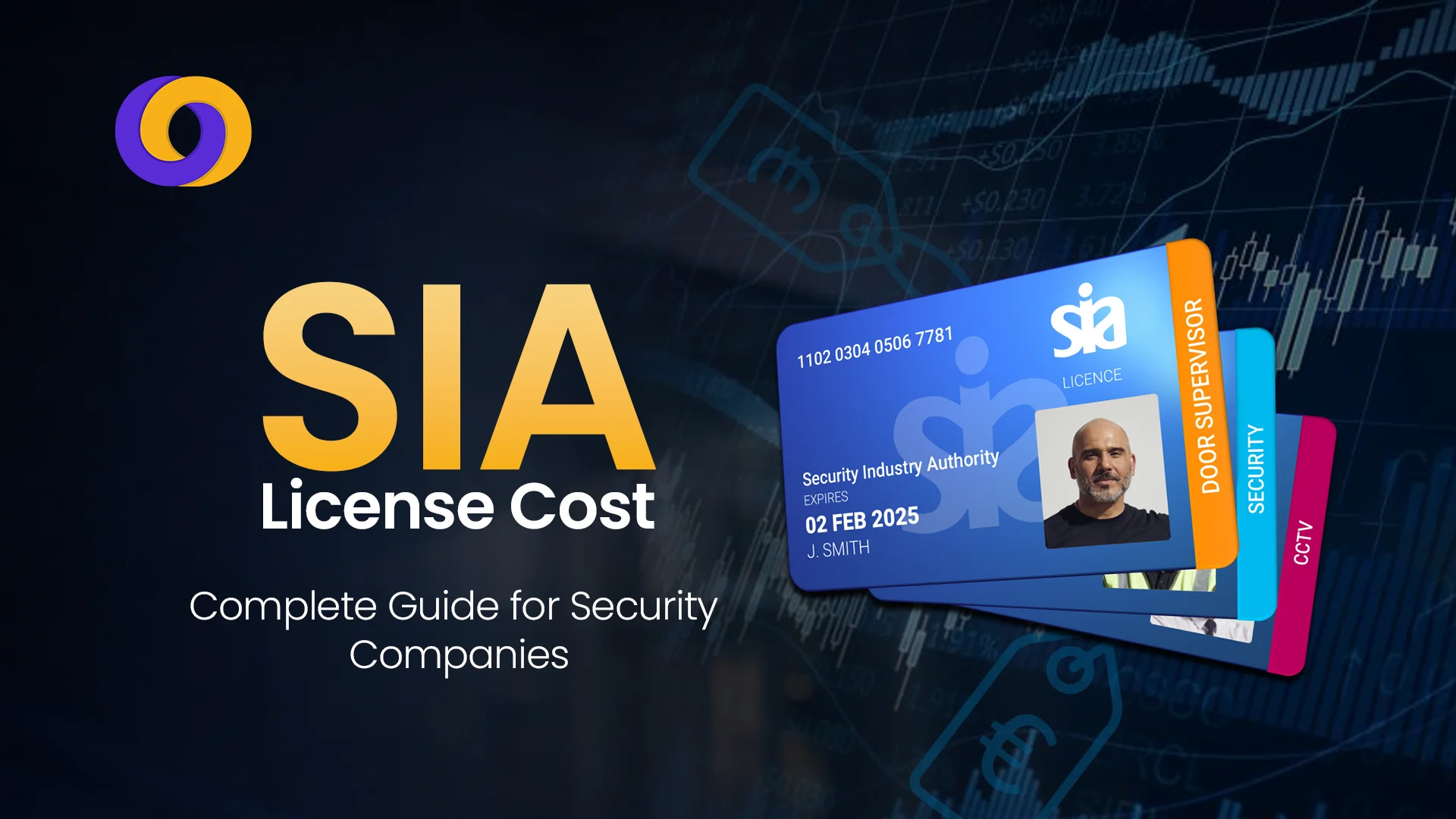
Every security company in the UK knows the drill. You find the perfect candidate—experienced, reliable, available to start immediately. Then comes the question: “Do you have your SIA licence?” If the answer is no, you’re looking at weeks of waiting, a complex application process, and a cost that someone must cover.
Whether you’re a security firm recruiting staff, a manager budgeting for training, or an individual looking to enter the industry, understanding the SIA licence cost is essential. It affects your hiring timelines, your training budgets, and ultimately, your ability to deploy licensed officers to client sites.
This guide breaks down everything you need to know about SIA licence costs in 2026—from application and renewal fees to discounts for unemployed applicants and the hidden costs that catch businesses out.
What Is an SIA Licence and Why Do You Need One?
The Security Industry Authority (SIA) is the UK government body responsible for regulating the private security industry. If you work in any of the following roles, you must hold a valid SIA licence:
- Door supervision
- Security guarding
- Close protection
- CCTV operation
- Public space surveillance
- Key holding
Operating without a licence isn’t just a breach of regulations—it’s a criminal offence. For security companies, employing unlicensed staff can result in fines, reputational damage, and loss of contracts.
So, when you’re calculating the SIA security license cost, remember it’s not an optional expense. It’s the price of doing business legally.
SIA Licence Cost 2026: The Application Fee
As of 2026, the standard UK SIA licence cost for a three-year licence is:
Licence Type | Application Fee |
New application (all sectors) | £210 |
Renewal application | £210 |
This fee covers the cost of processing your application, conducting background checks, and issuing the physical licence card.
Important: The fee is the same whether you’re applying for door supervision, security guarding, or CCTV. There’s no discount for multiple sectors—if you need to work in two roles, you need two separate licences, each with its own £210 fee.
SIA Licence Cost If Unemployed: The Discount
If you’re currently unemployed, you may be eligible for a reduced SIA licence cost.
The SIA licence cost if unemployed is £50, provided you meet the following criteria:
- You are not in paid employment
- You are applying for a licence in a sector where you intend to work
- You can provide evidence of your unemployment status (e.g., Jobseeker’s Allowance or Universal Credit statements)
This reduced fee is a significant saving—£160 off the standard application cost. It’s designed to remove barriers for people entering the security industry or returning to work.
For security companies: If you’re recruiting unemployed individuals, this discount can reduce your training and recruitment costs. However, be aware that the applicant must apply themselves; you cannot claim the discount on their behalf.
SIA Licence Renewal Cost: Don’t Let It Expire
An SIA licence is valid for three years from the date of issue. You can apply to renew up to four months before the expiry date. The SIA licence renewal cost is the same as a new application: £210.
But here’s the costly mistake security companies make letting licences expire.
If a licence expires, the holder cannot work until a new licence is issued. That means:
- Weeks of downtime while the application processes
- Last-minute cover arrangements (often at premium rates)
- Potential client contract breaches if key staff are suddenly unavailable
The SIA badge cost isn’t just the application fee—it’s the operational cost of not having licensed staff on site.
Pro tip: Use a workforce management system like Smart Workforce to track licence expiry dates. Set reminders three months before expiry to start the renewal process. That £210 renewal is far cheaper than a week of lost revenue from an uncovered shift.
Additional Costs: Training, Disclosure, and Admin
The security license UK cost doesn’t stop at the SIA application fee. Before you can even apply, you need to meet the licensing requirements. These come with their own price tags.
1. Required Training
To qualify for most SIA licences, you must complete specific qualifications:
- Door Supervision: Level 2 Award in Door Supervision (typically £150-£250)
- Security Guarding: Level 2 Award in Security Guarding (typically £150-£250)
- CCTV: Level 2 Award in CCTV Operations (typically £150-£200)
- Close Protection: Level 3 Certificate in Close Protection (significantly higher, often £1,500-£3,000)
Training costs vary by provider, location, and whether you choose in-person or online courses.
2. DBS Check
You’ll also need a DBS (Disclosure and Barring Service) check. For SIA licensing, this is an Enhanced DBS check, which costs approximately:
- £49.50 – £69.90 (government fee) plus admin fees from the umbrella body (typically £15 – £25)
The SIA will not process your application until a satisfactory DBS result is received.
3. Right to Work Verification
The SIA also checks your right to work in the UK. If you’re a non-UK national, there may be additional costs for document verification or visa checks.
4. Photographs and ID Documents
You’ll need:
- A recent passport-style photograph (digital upload or physical copy)
- Proof of identity (passport, driver’s license, etc.)
- Proof of address (utility bill, bank statement, etc.)
5. Training and Licensing Refresher Courses
Even after obtaining an SIA licence, officers may need refresher training to maintain best practices, stay updated on industry regulations, or renew qualifications for certain roles.
Budgeting for these ongoing development costs—typically £50-£100 per officer annually—helps maintain service quality and ensures your team remains compliant with evolving industry standards.
These are minor costs, but they add to the overall expense.
Total Cost: What You’ll Really Pay
Let’s add it up for a new security officer entering the industry:
Item | Cost |
Required training (e.g., Door Supervision) | £200 |
Enhanced DBS check (with admin) | £70 |
SIA licence application (standard) | £210 |
Total (employed applicant) | £480 |
For an unemployed applicant:
Item | Cost |
Required training | £200 |
Enhanced DBS check | £70 |
SIA licence application (reduced) | £50 |
Total (unemployed applicant) | £320 |
This is the real SIA badge cost —the investment required to legally work in UK security.
How Security Companies Can Manage Licence Costs
For security firms, managing licence costs across a workforce of dozens or hundreds of officers is a significant operational expense. Here’s how to handle it strategically:
- Build Training into OnboardingInstead of recruiting only licensed staff, consider hiring unlicensed candidates and funding their training. The £200-£250 training cost is often offset by lower recruitment fees and the ability to hire from a wider talent pool.
- Track Renewals RelentlesslyAn expired licence is an expensive problem. Use automated systems to track expiry dates across your workforce and prompt renewal applications three months in advance.
- Consider the Reduced Fee for Unemployed ApplicantsIfyou’re recruiting through Jobcentre Plus or from unemployment programmes, the reduced £50 application fee can make a difference. Structure your hiring to attract candidates who qualify.
- Build Licence Costs into PricingUltimately, licence costs are a cost of doing business. Ensure your contract pricing reflects the investmentrequired to maintain a fully licensed, compliant workforce.
- Leverage Bulk Applications and PartnershipsIfyou’re recruiting multiple candidates, negotiate volume discounts with training providers and umbrella bodies. Partnering with local colleges or Jobcentre Plus programmes can also help reduce per-person costs.
What Happens If You Don’t Have a Licence?
This bears repeating: working without an SIA licence is illegal.
- For individuals: You face a criminal record, fines up to £5,000, and a ban from working in the industry.
- For companies: You risk prosecution, reputational damage, and loss of clients who require licensed staff.
The SIA licence cost is a fraction of what you’d pay in fines, legal fees, and lost contracts.
Conclusion
The SIA licence cost in 2026 remains £210 for new applications and renewals, with a reduced £50 fee for unemployed applicants. But the true cost of licensing goes beyond the application fee—training, DBS checks, and administrative time add up.
For security companies, managing these costs across a workforce requires planning, tracking, and the right WFM systems. Every expired licence is a shift unfilled. Every missed renewal is a client relationship strained.
Invest in understanding the costs. Invest in tracking your team’s licence status. And remember: the price of a licence is nothing compared to the cost of operating without one.
Frequently Asked Questions
How much is an SIA licence in the UK?
The standard SIA licence application fee is £210 for a three-year licence. The same fee applies for renewals. Unemployed applicants may qualify for a reduced fee of £50.
Can I get a discount on my SIA licence if I’m unemployed?
Yes, unemployed applicants can apply for a reduced fee of £50, saving £160 off the standard cost. You’ll need to provide evidence of your unemployment status, such as Universal Credit or Jobseeker’s Allowance statements.
What is the total cost to become a licensed security officer in the UK?
The total typically ranges from £320 to £480, including required training (£150-£250), Enhanced DBS check (£70 approx.), and the SIA application fee (£210 or £50 if unemployed). Costs vary by training provider and DBS umbrella body.
How often do I need to renew my SIA licence?
An SIA licence is valid for three years. You can apply for renewal up to four months before the expiry date. The renewal cost is the same as a new application (£210).
Does the SIA licence cost the same for all security roles?
Yes, the application fee is £210 regardless of the licence type (door supervision, security guarding, CCTV, close protection). However, the required training and qualification costs vary significantly by role.

0 Comments