
Monday morning. Three employees call in sick. Another requests annual leave for next week. Your spreadsheet can’t tell you who’s available. Your team is scrambling for cover. And payroll is due in two days.
This isn’t just frustrating—it’s expensive.
According to the CIPD absence management report (2024), employee absence costs UK businesses an average of £522 per employee annually. For a 100-person company, that’s over £50,000 lost to sickness absence alone. Multiply that across your entire workforce, and the numbers become staggering.
From London-based SMEs struggling with spreadsheets to Manchester logistics firms tracking driver absence and Birmingham care homes managing shift coverage, UK businesses need a solution that works for their specific region and sector.
Effective leave management isn’t about punishing staff who get sick. It’s about identifying patterns, supporting employees, and ensuring operational continuity. The right sickness absence management software automates tracking, flags concerning patterns, integrates with payroll, and keeps you compliant with UK employment law.
This guide compares the best sickness absence management software that UK businesses rely on in 2026, from simple leave trackers to all-in-one HR platforms.
Key Takeaways
- Absence costs UK businesses £522 per employee annually
- Software automates tracking, compliance, and payroll
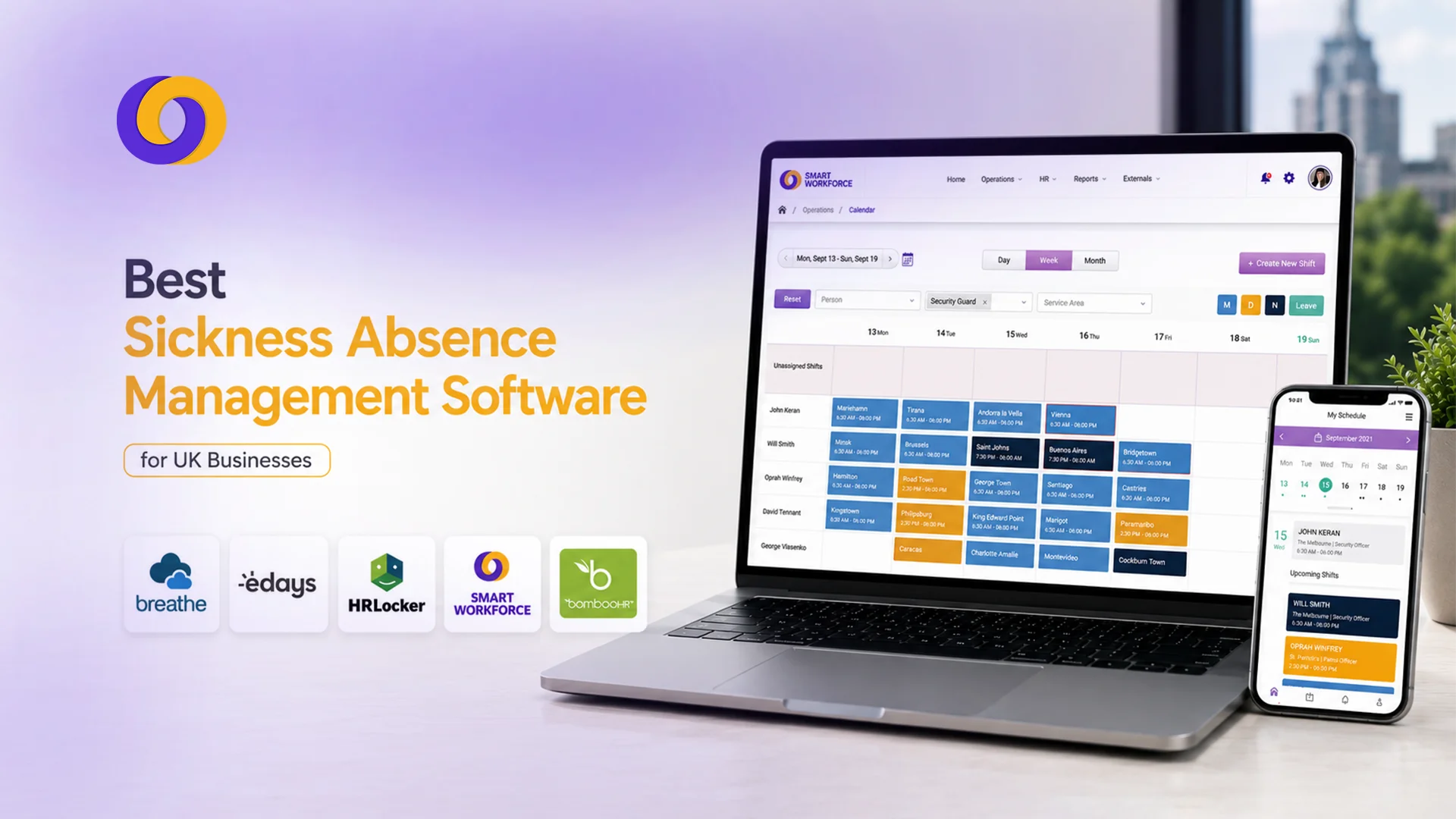
- Best tools: Breathe, Personio, e-days, Smart Workforce
- Choose based on company size and industry
What Is Absence Management Software?
It is a digital tool that helps employers track, monitor, and manage employee time off—including sick leave, annual leave, parental leave, and other authorised absences.
Unlike spreadsheets or paper calendars, dedicated staff leave management tools provide:
- Real-time visibility – See who’s off, who’s late, and who’s due back briefly
- Pattern recognition – Identify concerning trends (e.g., frequent Monday absences) before they escalate
- Automated compliance – Track statutory sick pay (SSP) and fit note requirements
- Payroll integration – Absence data flows directly to payroll, eliminating manual errors
- Employee self-service – Staff request leave and check balances without emailing managers
For UK businesses, absence management requires specific compliance with the Equality Act 2010 (disability-related absence) and SSP regulations. Your solution must handle these nuances.
Why Your Business Needs Dedicated System
Challenge | With Spreadsheets | With Absence Software |
Tracking sick leave | Manual data entry; easy to miss patterns | Automated tracking; pattern alerts |
Compliance with SSP | Risk of calculation errors | Automatic SSP calculations |
Return-to-work meetings | No central record | Templated forms; audit trail |
Disability-related absence | Hard to separate from ordinary sickness | Flag and handle separately |
Payroll integration | Manual re-entry (errors guaranteed) | Seamless data flow |
The bottom line: Spreadsheets don’t scale. At 20+ employees, manual absence management becomes a liability.
For NHS trusts, even a single day of unexpected absence can disrupt patient care. In care homes, tracking sickness absence is critical for maintaining safe resident-to-staff ratios. Security companies face unique challenges—lone workers, night shifts, and BS7858 compliance—where absence tracking must integrate with real-time scheduling.
Want real-time absence tracking with shift scheduling? Smart Workforce helps service businesses stay compliant and fully staffed.
Top Sickness Absence Management Software for 2026
Here is a comprehensive detail about the 7 best leave management solutions used by UK businesses:
1. Breathe HR
Best for: UK-based SMEs (up to 200 employees)
Why it stands out: Breathe is celebrated for its highly localised design, specifically catering to UK employment regulations and company sizes. It’s built for British businesses, by people who understand British employment law.
Key features:
- Holiday and sickness tracking with automatic entitlement calculations
- Sickness absence reporting (Bradford Factor, absence patterns)
- Document storage for fit notes and return-to-work forms
- Simple dashboard showing who’s off and who’s due back
Pros: Affordable (£3-4 per employee); UK-specific compliance built-in; intuitive for non-HR users
Cons: Limited advanced features; no native payroll (integrates with third parties)
Best for: Small businesses (1-50 employees) needing affordable, UK-focused solution
Rating: 4.7/5
2. Timetastic
Best for: Absolute simplicity
Why it stands out: Timetastic cuts away complex HR clutter. It allows employees to request time off (including sick leave) and managers to track team availability via an intuitive calendar view or mobile app.
Key features:
- Visual absence calendar (see your whole team at a glance)
- Automatic holiday allowance calculations
- Sick leave tracking with optional return-to-work reminders
- Mobile app for on-the-go approvals
Pros: Exceptionally easy to set up and use; affordable; great for visual learners
Cons: Limited reporting and analytics; no payroll integration; basic sick leave features compared to HRIS platforms
Best for: Small teams (1-30 employees) who want simple, visual staff absence management without HR complexity
Rating: 4.6/5
3. Personio
Best for: Scaling companies looking for a comprehensive all-in-one HR system
Why it stands out: Personio handles leave, payroll, and core HR tasks in a single hub. It’s designed for growing businesses that need more than just absence tracking.
Key features:
- Centralised absence management (sick, annual, parental, compassionate)
- Automated SSP calculations and fit note tracking
- Return-to-work workflows and documentation
- Integration with payroll providers
Pros: All-in-one solution; strong for companies with European operations; excellent access controls
Cons: Custom pricing (not transparent); may have more features than micro-businesses need; implementation can take several weeks
Best for: Growing SMEs (20-200 employees) needing comprehensive HR and leave management compliance
Rating: 4.6/5
4. e-days
Best for: The premier award-winning absence software for larger organisations
Why it stands out: e-days provides robust reporting to easily monitor phased returns, trigger points, and complex absence analytics. It’s built for organisations where absence tracking is a strategic priority.
Key features:
- Real-time absence dashboards
- Automated Bradford Factor scoring
- Return-to-work interview templates
- Phased return planning for long-term sick leave
- Integration with payroll and HR systems
Pros: Excellent reporting and analytics; purpose-built for absence management; scales well for larger teams
Cons: More expensive than basic tools; may be overkill for very small teams
Best for: Larger organisations (50-500 employees) needing sophisticated sickness absence management software
Rating: 4.5/5
5. HRLocker
Best for: A well-rounded UK/European platform for compliance-focused businesses
Why it stands out: HRLocker monitors both annual leave and sick leave seamlessly while ensuring strict, centralised GDPR compliance. It’s designed for businesses that take data protection seriously.
Key features:
- Centralised leave management (sick, annual, parental, carers)
- Automated statutory leave calculations (including SSP)
- GDPR-compliant document storage for fit notes
- Return-to-work workflows
- Performance management integrated with absence data
Pros: Strong GDPR focus; good for UK and European compliance; all-in-one HR features
Cons: Interface less modern than competitors; learning curve for advanced features
Best for: Medium-sized UK businesses (20-150 employees) prioritising GDPR compliance alongside managing leaves effectively
Rating: 4.3/5
6. BambooHR
Best for: A global powerhouse HR software solution for scaling UK businesses
Why it stands out: BambooHR is brilliant for absence tracking. It’s ideal if your UK business is scaling and requires advanced reporting, onboarding, and compensation tracking alongside sick leave.
Key features:
- Time-off tracking with customisable policies
- Sickness absence reporting and pattern analysis
- Mobile app for employee self-service
- Integration with payroll and benefits platforms
- Performance management module
Pros: Industry-leading user interface; excellent customer support; customisable reporting
Cons: Custom pricing (can be expensive for small teams); no native payroll (integrates with third parties)
Best for: Growing UK businesses (20-200 employees) prioritising user experience and advanced HR features
Rating: 4.8/5
7. Smart Workforce
Best for: All-in-one workforce management for shift-based and service sector employers
Why it stands out: Smart Workforce combines absence tracking with shift scheduling, real-time attendance monitoring, lone worker safety, and compliance vetting (BS7858). It’s purpose-built for UK security, care, facilities management, and service sector employers.
Key features:
- Centralised leave requests and approvals (sick, annual, compassionate, parental)
- Real-time absence visibility integrated with shift schedules
- Automated SSP calculations and fit note tracking
- Return-to-work workflows with templates
- Integration with payroll and time tracking
- Mobile app for staff self-service
- Lone worker check-ins and alerts
Pros: All-in-one platform (absence + scheduling + attendance + compliance); purpose-built for shift-based teams; real-time visibility prevents coverage gaps
Cons: Specialised for the service sector; may have features that office-based teams don’t need
Best for: UK security, care, logistics, manufacturing, and service sector employers (10-500 employees) needing an integrated leave management system and scheduling
Rating: 4.7/5
Comparison Table: Sickness Absence Management Software
Software | Best For | Starting Price | UK Payroll | Mobile App | Rating |
Breathe HR | UK SMEs (1-50) | £3-4/user | No (integrates) | Yes | 4.7/5 |
Timetastic | Simplicity (1-30) | £1.25-2.50/user | No | Yes | 4.6/5 |
Personio | Growing SMEs (20-200) | Custom | Yes | Yes | 4.6/5 |
e-days | Larger orgs (50-500) | Custom | Yes | Yes | 4.5/5 |
HRLocker | GDPR compliance | Custom | Yes | Yes | 4.3/5 |
BambooHR | Scaling UK biz | Custom | No (integrates) | Yes | 4.8/5 |
Smart Workforce | Service sector (10-500) | Tailored | Yes | Yes | 4.7/5 |
Compare these tools based on your business needs, or explore Smart Workforce for an all-in-one solution.
How to Choose the Right Software
A London-based tech startup with 20 employees has different needs than a Manchester distribution centre with 100 shift workers or a Birmingham care home managing lone carers. Your location and sector influence which software features matter most.
Ask yourself these five questions:
1. How many employees do you have?
- 1-10 employees → Simple tool like Timetastic
- 10-50 employees → Breathe HR or HRLocker
- 20-200 employees → Personio or BambooHR
- 50-500 employees → e-days or Smart Workforce
2. Do you need payroll integration?
- Yes → Choose Personio, e-days, or Smart Workforce
- No → Breathe, Timetastic, or BambooHR (integrate with third-party payroll)
3. Do you have shift workers or lone workers?
- Yes → Smart Workforce (scheduling + absence integrated)
- No → Any of the above
4. What’s your budget?
- Low budget → Timetastic (£1.25-2.50/user)
- Medium budget → Breathe HR (£3-4/user)
- Premium → Personio, e-days, BambooHR, Smart Workforce (custom pricing)
5. Do you need UK-specific compliance?
- Yes → Breathe HR, Personio, HRLocker, Smart Workforce (all UK-focused)
- Global operations → BambooHR or Personio
Common Absence Management Mistakes
Even with the best intentions, many UK businesses fall into these traps:
Relying on spreadsheets
Spreadsheets don’t send alerts, track patterns, or calculate SSP automatically. One formula error can corrupt months of data, and multiple versions create chaos with no single source of truth.
Not tracking patterns
Without automated pattern recognition, you won’t spot that an employee is always off on Mondays or that absences spike after payday. These patterns are early warning signs you’re missing.
Ignoring return-to-work interviews
Skipping these conversations means missing the root cause of absence. A quick “welcome back” chat can reveal workplace stress, undiagnosed health issues, or team conflicts—but only if you have a system to document and act on what you learn.
Poor documentation
No audit trail means no defence. If an employment tribunal or HMRC investigation occurs, you need proof of consistent policy application. Scattered notes and verbal conversations don’t count.
No clear triggers or escalation
Without defined absence thresholds (e.g., Bradford Factor scores), every case is treated inconsistently. This leads to perceptions of favouritism, potential discrimination claims, and managers unsure when to escalate.
ROI of Absence Management Software
London-based SMEs save an average of £8,000 annually on payroll errors alone. Manchester logistics firms report 25% less agency spend. Birmingham care homes cut sickness absence by 18% within six months of implementing dedicated software.
Investing in dedicated software delivers measurable returns:
Reduced absenteeism
Organisations using absence management software typically see a 15-25% reduction in short-term sick leave within the first year. Early pattern identification allows supportive intervention before problems escalate.
Lower payroll errors
Manual SSP calculations are error-prone. Automated systems eliminate these mistakes, saving an average of £5,000-15,000 annually in overpayments and corrective admin for a 50-person business.
Better compliance
Avoid unlimited fines and employment tribunal claims. Proper documentation of return-to-work meetings, fit notes, and consistent policy application provides an audit trail that protects your business.
Improved workforce productivity
Real-time visibility means managers stop scrambling for cover. With absence data integrated into scheduling, shifts are filled proactively, not reactively. This reduces agency spend and overtime premiums by up to 30%.
Reduced manager admin time
Manual absence tracking consumes 5-10 hours of management time weekly. Software cuts this by 70%, freeing managers to focus on operations, not spreadsheets.
Smart Workforce: The Best Leave Management System for Service Sector Employers
While standard HR tools manage employee data, Smart Workforce goes further—handling real-time shift scheduling, absence tracking, lone worker safety, and compliance vetting (BS7858) in one integrated platform.
For security companies, care homes, logistics firms, and manufacturing businesses, effective absence management isn’t just about tracking sick days. It’s about ensuring every shift is covered, every compliance requirement is met, and every lone worker is safe.
Smart Workforce delivers:
- Real-time absence visibility integrated with shift schedules
- Automated SSP calculations and fit note tracking
- Return-to-work workflows with templates
- Lone worker check-ins during sickness absence
- Audit-ready reports for compliance inspections
Discover How Smart Workforce Transforms Absence Management – Book a Demo Today
Conclusion
The best sickness absence management software businesses need depend on your size, budget, and industry.
- For small office-based teams: Breathe HR or Timetastic offer affordable, simple solutions
- For growing SMEs: Personio or BambooHR provides scalability and advanced features
- For larger organisations: e-days delivers sophisticated analytics
- For service sector employers: Smart Workforce integrates absence tracking with shift scheduling and lone worker safety
Whether you run a care home in Birmingham, a security company in Manchester, or an NHS trust in London, the right software adapts to your specific absence management challenges.
Don’t let manual spreadsheets cost you thousands in lost productivity and compliance failures. Invest in a dedicated software—your team, your payroll, and your peace of mind will thank you.
Frequently Asked Questions
What is the best sickness absence management software for small UK businesses?
Breathe HR and Timetastic are excellent for small businesses (1-50 employees). Breathe offers stronger UK compliance features; Timetastic is simpler and more visual. Both are affordable, starting at £1.25-4 per employee monthly.
Does absence management software automatically calculate Statutory Sick Pay (SSP)?
Yes—most UK-focused platforms (Breathe, Personio, e-days, Smart Workforce) include automatic SSP calculations. Always verify before purchasing, as some global platforms may not support UK-specific statutory payments.
Can leave management software help with disability-related absence under the Equality Act?
Yes. Good systems allow you to flag disability-related absence separately from ordinary sickness, helping you meet your duty to make reasonable adjustments and avoid discrimination claims. Look for customisable absence categories.
How does absence software integrate with payroll?
Most platforms offer integration with major UK payroll providers (Xero, QuickBooks, Sage, ADP). Absence data (sick days, unpaid leave) flows automatically into payroll, eliminating manual re-entry and reducing errors. Smart Workforce, Personio, and e-days excel in this area.
Is leave management software worth it for a team of 10 employees?
Yes. Even small teams benefit from centralised tracking, pattern identification, and reduced admin time. Spreadsheets become error-prone at 10+ employees. Timetastic or Breathe HR offer affordable entry points (£1.25-4 per employee monthly) that pay for themselves in saved admin hours.

0 Comments