
Have you ever estimated the consequences of the unprofessional behavior of staff members on workplace productivity? According to an estimate, businesses in the US lost more than $200 billion per year due to counterproductive work behavior from employees.
Can employers minimize these losses? Yes, they can.
Staff screening is a proven way to transform recruitment and hire trusted and reliable personnel. Companies can use employee screening and vetting tools to perform detailed background checks and thoroughly vet potential employees per recognized standards.
Automated staff vetting tools help employers review clear educational and professional histories and check criminal backgrounds to make informed hiring decisions. This way, recruiting new staff becomes much easier with transparency and accuracy.
This article will discuss the best employee screening and vetting practices companies should consider to get their desired results.
So, let’s get started.
What is Employment Screening & Vetting?
Employee screening & vetting are the most crucial stages of the recruitment process. It involves checking backgrounds and evaluating candidates’ information to select the most suitable professionals. Besides, employers review applicants’ credentials, conduct comprehensive background checks, and assess their qualifications for a particular job.
Companies need to vet applicants against standards like BS7858 to ensure they possess the necessary skills, qualifications, and character traits for a specific position. The process minimizes risks associated with staff recruitment and enables HR managers to verify the accuracy of information provided by candidates.
Hence, by ensuring compliance with BS7858 staff vetting or relevant standards, employers can timely identify potential red flags before they affect overall team performance.
What Are the Requirements for Staff Screening & Vetting Include?
The requirements of staff vetting vary depending on the geographical location and regulations. For instance, if a company operates in the UK, it has to screen applicants per the BS7858 standard. For this purpose, employers should consider different types of background checks, including:
- ID Verification
- 5 Year Employment & Educational History Check
- 31-day Employment Gap Investigation
- Right to Work Check
- 5 Year Address Verification
- Basic DBS Criminality Check
- Credit Check
- Sanctions List Check
Best Practices for Employee Screening & Vetting
If you are an employer or an HR manager, consider these practices to screen your potential employees and achieve your desired goals:
1. Establish Clear Screening Criteria
First, employers must establish clear and well-versed screening criteria for effecting the employee screening and vetting process. They must define specific skills, qualifications, expertise, and relevant attributes required for the position.
For instance, if you are hiring a security guard, ensure they are SIA-licensed, physically and mentally strong, and possess relevant education. Moreover, it would ensure that the candidate has no criminal or suspicious background that might impact their career.
By following this approach, companies can promote consistency and fairness throughout their hiring process. Besides, employees can assess candidates based on equal standards and eliminate bias or nepotism.
Eventually, they can find the best-fit individuals who match the employment criteria and contribute to organizational growth and development.
2. Conduct Thorough Background Checks
Candidates’ background checks provide employers with valuable insights into their history. Companies can get complete details about applicants’ education, address, career, and criminal records. Based on that information, employers can verify the credibility of applicants and identify any potential risks.
Therefore, companies must conduct thorough background checks and review candidates’ credentials, professional licenses and certifications, and criminal records. Besides, HR managers should investigate 31-day employment gaps and 5-year addresses.
By investing their time and energy into thorough background checks, companies can significantly reduce the possibility of hiring candidates with suspicious histories or fake credentials. Hence, the process minimizes risks that may disrupt the organizational reputation or negatively affect the work environment.
3. Check for Professional References
Companies must check professional references from previous employers to gain additional perspective on a candidate’s performance, character, and work ethic. Approaching listed references is an excellent practice to get feedback from earlier colleagues, managers, or mentors about the applicant’s strengths and weaknesses. Their feedback is crucial to evaluating a candidate’s suitability for the specific role.
Professional references also provide valuable information about candidates’ job titles and professional conduct at previous organizations. The practice adds a layer of screening & vetting that enables recruiters to validate the candidate’s claims and make better decisions.
4. Use Automated Staff Screening & Vetting Software
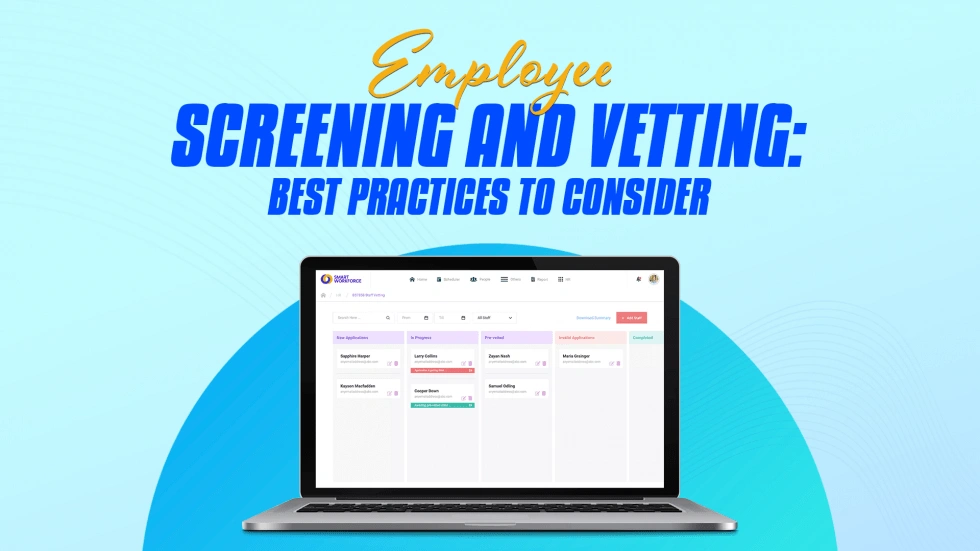
We’re living in the era of digital transformation, where technology has become a crucial aspect of business growth. Many software systems and automated solutions are available to screen applicants against designated vetting standards. These tools streamline various parts of the vetting process and bring accuracy to results.
Hence, using automated screening tools is another good practice that employers must consider to get accurate results quickly. With these automated solutions, companies can verify applicants’ educational and employment records, check criminal backgrounds, and flag any discrepancies.
Automated vetting tools save time and resources and bring consistency to the staff vetting process. Using these tools helps employers evaluate the most relevant aspects of a candidate’s profile and select the best based on their assessment.
5. Ensure Ongoing Compliance with Continuous Vetting
Organizations need to conduct employee screening processes throughout an employee’s entire work period instead of doing it only during the hiring process. Positions that require high security, along with trust and access to confidential resources, must implement ongoing vetting procedures that include regular employee background checks as their essential security measure.
The process requires the organization to conduct periodic security assessments, which check both the operational standing and all essential employee details to discover new security threats that have developed since the last assessment. The updates can involve criminal record modifications, together with major financial integrity alterations and confirmation of new professional license acquisitions.
Final Thoughts
A reliable, super-talented, and dedicated workforce is a valuable asset for organizations of any size or sector. Visionary employers and business leaders invest their time and money to transform recruitment practices and hire top talent to achieve their desired corporate objectives.
Employee screening & vetting are the most crucial aspects of any organization’s hiring strategy. The process allows HR managers to vet applicants and verify their credentials. Besides, employers can evaluate the skills and qualifications of candidates and select the most suitable ones that meet job requirements.
In this regard, we have discussed some best practices to screen potential workers for better results. These practices would help employers build a competent workforce to contribute to business growth and deliver impeccable results.
Frequently Asked Questions
What is the difference between a basic DBS check and full BS7858 vetting?
A basic DBS check shows only unspent convictions. BS7858 vetting is a comprehensive, accredited standard that includes identity verification, a full 5-year employment history with gap analysis, address history, right-to-work, financial probity, and a criminal record check. It’s the gold standard for high-trust roles.
How long does a typical employee screening process take?
Timelines vary. A basic background check can take 2-5 days. A full, manual BS7858 vetting can take 3-6 weeks due to verifying references and gaps. Using automated vetting software can streamline this to 1-2 weeks by digitising requests and tracking.
Can we perform employee vetting without the candidate's consent?
No. In the UK, you must have the candidate’s explicit, informed consent before initiating any background check. You must also clearly communicate what checks will be performed and how their data will be used, in compliance with GDPR and data protection laws.

0 Comments