
TL;DR
- Costs are split into hardware and software. One-off reader bundles start around £698 net for three years, while annual handset licences cost roughly £322 upfront plus £272 per year.
- Subscription vs. one-off matters. A lifetime licence reader costs less over three years if device numbers stay fixed; subscriptions suit growing teams.
- Hidden costs exist. Battery replacement, docking time per shift, and spare devices are rarely in headline prices.
- UK buyers must check VAT treatment. Some shop pages quote inclusive of 20% VAT, while B2B quotes are net. Normalise before comparing.
- Proof of presence is the core value. Digital patrol systems create timestamped, location-verified records that clients, insurers, and auditors accept.
A missed patrol is rarely just a missed patrol.
At a warehouse, it may leave a loading bay unsecured. On a construction site, it may mean a hazard goes unreported. In a hotel, it can become a client complaint with no defensible record of what happened.
UK security firms face growing pressure to prove patrols actually happen. Clients ask harder questions. Insurers demand evidence before writing cover. And the SIA Approved Contractor Scheme expects documented delivery.
A security guard patrol system solves this. It replaces paper logs with digital, timestamped records that prove guards were in the right place at the right time.
But what does it cost? What features matter? And how do you avoid hidden fees?
This guide covers everything UK buyers need to know about security guard patrol systems in 2026.
What Is a Security Guard Patrol System?
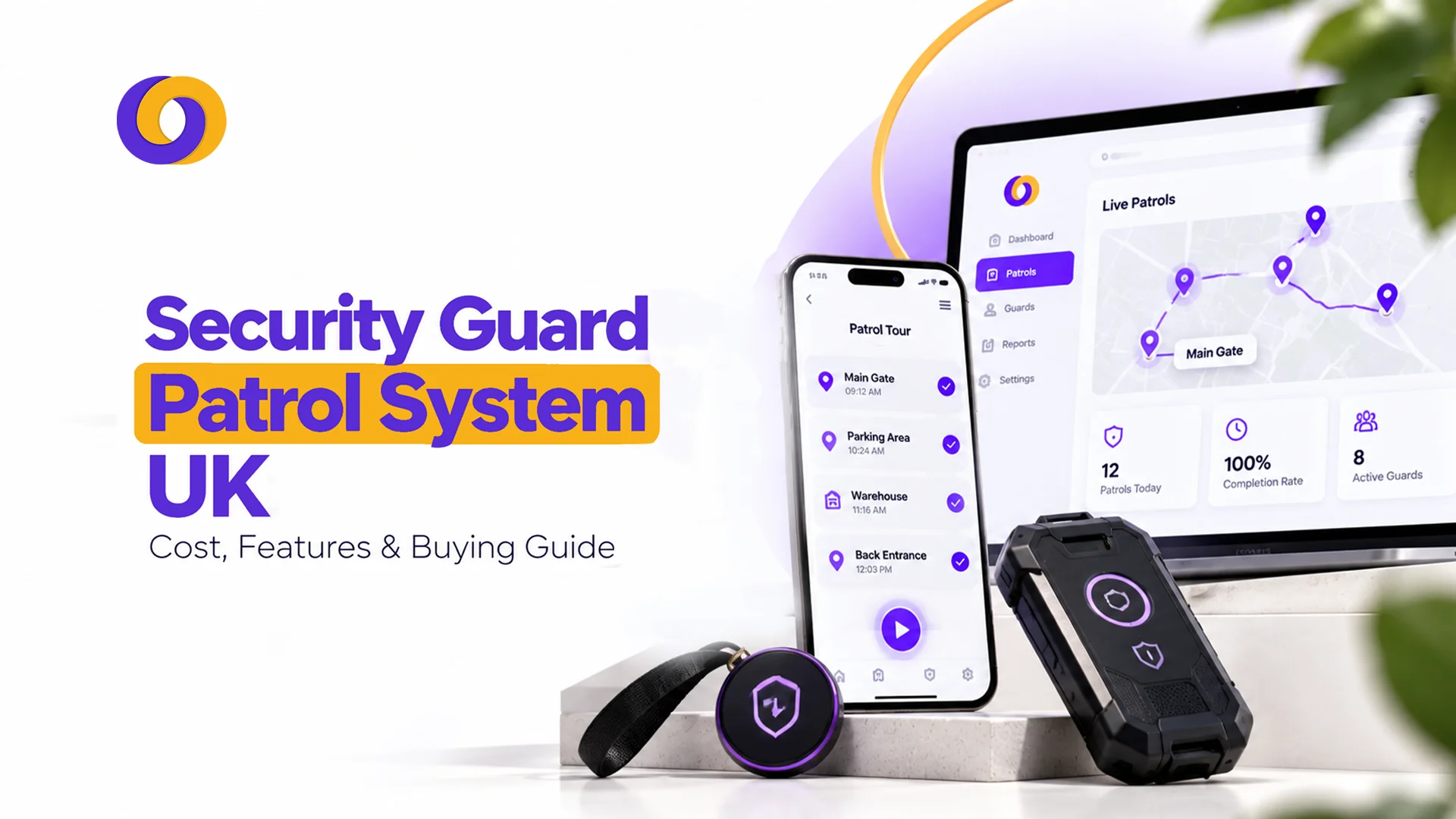
A security guard patrol system is software and hardware that records when, where, and how guards complete their rounds.
It typically uses:
- Checkpoints: QR codes, NFC tags, or GPS coordinates
- Devices: Smartphones, rugged readers, or tablets
- Software: Cloud platform for logging, reporting, and alerts
The system creates a timestamped, location-verified record of every checkpoint scan. That record becomes evidence.
Security Guard Patrol System Cost UK: Pricing Models
Pricing splits into two main models.
Model 1: One-Off Reader with Lifetime Licence
You buy the hardware outright. No annual licence fee.
| Item | Cost |
|---|---|
| Reader bundle (recorder, dock, 20 patrol points, lifetime PC licence) | 698.15 pounds net |
| Spare reader | 490.13 pounds |
| Battery replacement (after two to four years) | Not published |
Best for: Teams with stable device numbers. No ongoing licence fees.
Model 2: Annual Handset Licence
You pay yearly for software access. Hardware may be separate or bundled.
| Item | Year 1 | Year 2 | Year 3 |
|---|---|---|---|
| Licence and support | 322.43 pounds | 271.83 pounds | 271.83 pounds |
| Handset | Not priced | Not priced | Not priced |
| Three-year total (one device) | 866.09 pounds |
Best for: Growing teams. Easier to add devices.
The Three-Year Comparison
| Model | Three-Year Cost (One Device) | Monthly Equivalent |
|---|---|---|
| One-off reader | 698.15 pounds | 19.39 pounds |
| Annual licence | 866.09 pounds | 24.06 pounds |
The gap: 167.94 pounds. That is about 13 hours at the National Living Wage.
Cost-Driving Factors
Three factors drive pricing.
1. Number of Visits per Night
More visits means more officer time, which means higher cost. Most clients choose two to four visits per night at varied times.
2. Location Relative to Patrol Route
If your site sits on an existing patrol route, costs drop. Multi-site contracts on the same route are most cost-effective.
3. Key Holding and Alarm Response
Adding key holding and alarm response to your contract closes the gap between patrol visits. It is usually a modest supplement rather than priced separately.
Hidden Costs to Watch For
Headline prices do not tell the full story.
| Hidden Cost | Why It Matters |
|---|---|
| Battery replacement | Every two to four years. Price not always published |
| Docking time | One-off readers need docking every shift. 1,095 shifts over three years adds up |
| Spare devices | A failed reader means no records until replaced |
| Additional computer licences | Lifetime licence covers one computer. Second office needs another |
| NFC handsets | Subscription model often excludes handset cost |
| VAT treatment | Shop pages quote inclusive. B2B quotes are net. Normalise before comparing |
The docking math: If docking takes 45 seconds per shift, across 1,095 nightly shifts over three years, that is 13.7 hours of work. At 12.71 pounds per hour, that is 174 pounds, more than the gap between the two models.
Security Patrol System Features to Look For
Not every system solves the same problem. Here is what matters, and it is worth comparing against the wider range of types of security patrols your contracts actually require.
| Feature | Why It Matters |
|---|---|
| Offline operation | Patrols continue without signal. Data syncs when reconnected |
| GPS tracking | Verifies guard location. Visualise routes on maps |
| Incident reporting | Capture photos, video, and notes during patrols |
| Lone worker alerts | SOS buttons and missed-checkpoint alerts protect guards |
| Multiple checkpoint types | QR, NFC, RFID, or GPS. Flexibility for different site needs |
| Real-time alerts | Notifications for missed checkpoints or overdue patrols |
| Reporting | Exportable reports for clients, insurers, and audits |
Security Guard Monitoring Cost: What the Market Charges
| Service | Indicative Cost |
|---|---|
| Mobile patrol (per visit) | Around 35 pounds excluding VAT |
| Manned guarding (per hour) | 20 to 25 pounds |
| 24-hour single-guard rota | Around 13,000 pounds per month excluding VAT |
| Guard tour system (one-off reader) | 698.15 pounds for three years |
| Guard tour system (annual licence) | 322.43 pounds year one, 271.83 pounds thereafter |
The comparison: Mobile patrols are almost always cheaper than static guarding because you pay for scheduled visits, not continuous presence. For a deeper look at how reader-based systems compare on cost, see our guide to the best guard tour patrol systems in the UK.
Security Guard Management Apps Cost
Beyond patrol tracking, guard management apps add scheduling, attendance, and compliance.
| Provider | Starting Price |
|---|---|
| Smart Workforce | Free (up to 10 staff); 5 pounds per user per month Premium |
| Deputy | From 3.25 pounds per user per month |
| RotaCloud | From 10 pounds per month (up to 5 staff) |
These platforms combine patrol tracking with rostering, GPS-verified attendance, and BS7858 vetting tracking.
Buying Guide
Discussed here are some suggestions when you want to purchase a guard patrol software:
Step 1: Assess Your Site
| Question | Why It Matters |
|---|---|
| Indoor or outdoor? | Outdoor needs weatherproof devices or GPS checkpoints |
| Signal reliability? | Poor signal needs offline mode |
| Number of checkpoints? | Determines device and tag requirements |
| Lone workers? | Needs SOS alerts and missed-checkpoint monitoring |
Step 2: Choose Your Pricing Model
| If you… | Choose… |
|---|---|
| Have stable device numbers | One-off reader with lifetime licence |
| Expect to grow | Annual handset licence |
| Want lowest three-year cost | One-off reader |
| Want flexibility | Subscription |
Step 3: Check UK Compliance
- ICO guidance on monitoring: Workers must be made aware of monitoring before it takes place
- GDPR: Patrol data is personal data. Must be processed lawfully
- BS 8484: Lone worker device services should meet this standard
Step 4: Normalise VAT
UK shop pages often quote inclusive of 20 percent VAT. B2B quotes are net. One UK reseller does both on the same page.
Action: Normalise everything to net before comparing.
Step 5: Test Before Buying
Most providers offer demos or trials. Test:
- Checkpoint scanning speed
- Offline mode
- Report generation
- Mobile app experience
Conclusion
A security guard patrol system is no longer optional for UK security firms. Clients demand proof. Insurers require evidence. And paper logs create liability, not protection.
Your buying checklist:
- Assess your site (indoor or outdoor, signal, checkpoints)
- Choose pricing model (one-off or subscription)
- Check hidden costs (battery, docking, spares)
- Normalise VAT before comparing
- Verify UK compliance (ICO, GDPR, BS 8484)
- Test before buying
The right system pays for itself by winning contracts, satisfying insurers, and protecting your firm from disputes.
How Smart Workforce Supports Patrol Management
Smart Workforce combines patrol tracking with scheduling, attendance, and compliance in one platform.
Key features for patrol management:
- QR and GPS checkpoint scanning: Guards verify patrol completion
- Real-time monitoring: Live dashboard of all patrols
- Lone worker safety: Automated check-ins, panic alerts, fall detection
- Incident reporting: Photo, video, and text reports
- Automated client reports: Branded proof of service delivery
- BS7858 vetting tracking: Monitor screening status and expiry
Discover how Smart Workforce supports patrol management. Book a demo today.
Frequently Asked Questions
How much does a security guard patrol system cost in the UK?
One-off reader bundles cost around 698 pounds net for three years. Annual licences cost 322 pounds in year one, then 272 pounds annually. Three-year total for one device: 866 pounds.
What factors affect security guard patrol system pricing?
Number of visits per night, distance from existing patrol routes, device count, pricing model (one-off versus subscription), and whether key holding or alarm response is included.
What features should a security guard patrol system have?
Offline operation, GPS tracking, incident reporting, lone worker alerts, multiple checkpoint types (QR, NFC, or GPS), real-time alerts, and exportable reporting.
Does a security guard patrol system use GPS tracking?
Yes. GPS tracks guard location, verifies checkpoint presence, and visualises patrol routes on maps. Many systems combine GPS with QR or NFC checkpoints.
Can security guards use a mobile app for patrols?
Yes. Smartphone-first systems let guards scan checkpoints, log incidents, and upload reports. They work offline and sync when signal returns.
What are NFC and QR checkpoints in a guard patrol system?
NFC tags and QR codes are physical markers at patrol points. Guards scan them to prove presence at a specific location and time.
Can guards report incidents through patrol software?
Yes. Most systems let guards log incidents with photos, video, and text during patrols. Reports are timestamped and location-verified.
Is a security guard patrol system suitable for small security companies?
Yes. Free tiers and low-cost entry plans exist. Small firms benefit from client-ready reports and proof of service without large upfront costs.
What is the difference between a guard tour system and a patrol system?
A guard tour system verifies checkpoint visits. A patrol system typically adds GPS tracking, incident reporting, lone worker safety, and scheduling.
Is cloud-based security patrol software better than paper logs?
Yes. Cloud systems create tamper-proof, timestamped records that clients and insurers accept. Paper logs can be lost, damaged, or falsified.
How can businesses calculate the ROI of a security guard patrol system?
Compare costs (hardware, software, docking time) against benefits: contracts won or retained, reduced disputes, lower insurance premiums, and eliminated time theft.

0 Comments