
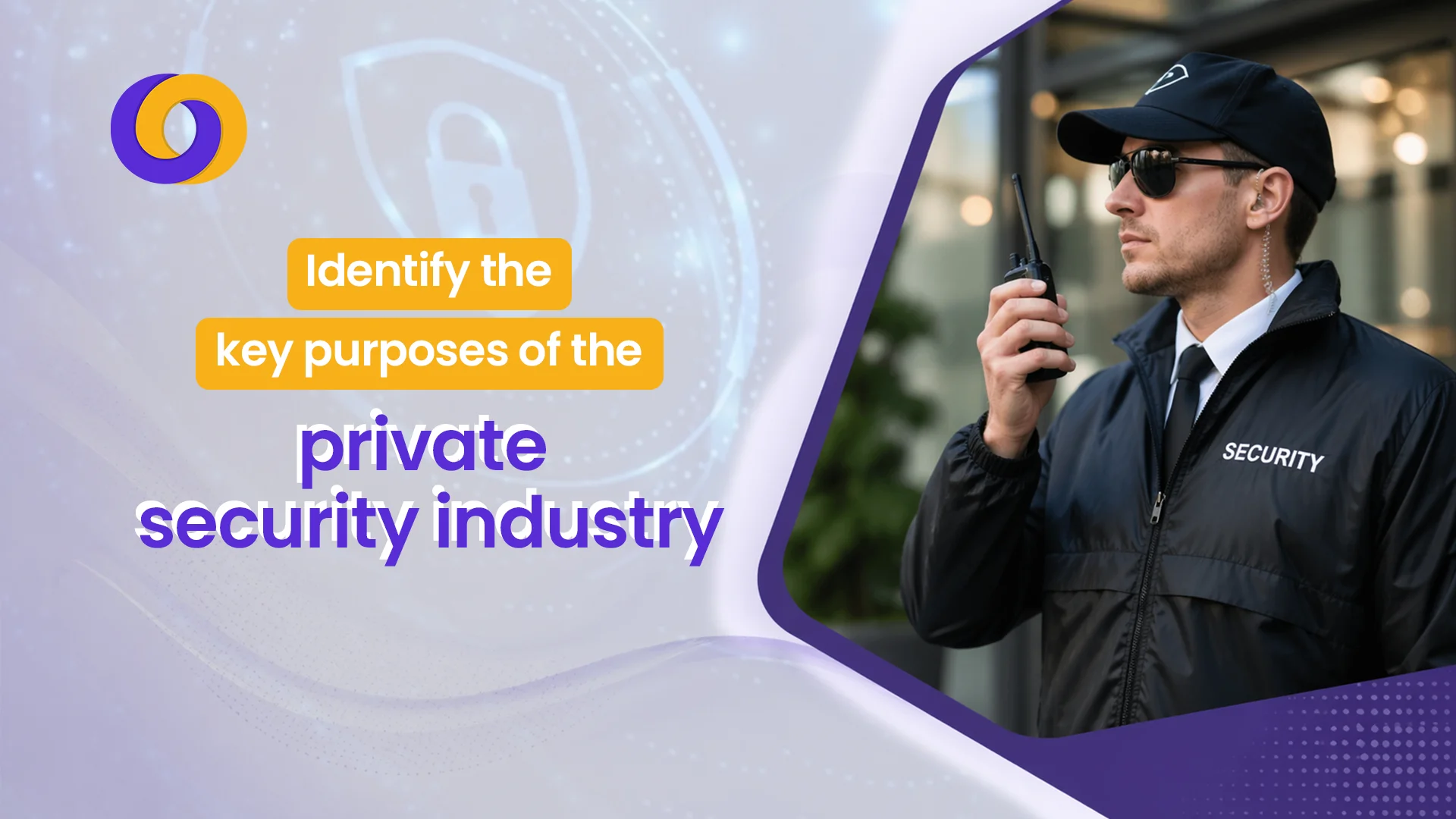
There are now two and a half times as many licensed private security guards in the UK as there are police officers. This staggering statistic reflects a fundamental shift in how Britain approaches safety and crime prevention. The private security industry has evolved from a niche service for wealthy businesses into an essential pillar of national resilience, working alongside—and increasingly in partnership with—public police forces.
But what exactly is the purpose of the private security industry in 2026? Why has it grown so dramatically, and what roles does it play that public policing cannot fulfil alone?
This guide explores the key purposes of the UK private security industry, from its traditional crime prevention role to emerging responsibilities in national security, technology integration, and public-private partnerships.
What Is the Private Security Industry?
The private security industry encompasses professionally managed security solutions delivered by non-governmental organisations to safeguard people, property, and assets. These services help prevent unauthorised access, deter criminal activity, and ensure safety through measures such as security personnel, surveillance systems, and risk management strategies.
Key service types include:
- Manned guarding – Deployment of trained security personnel who physically monitor sites, control access, and maintain safety
- Mobile patrol – Vehicle-based patrols covering large or dispersed sites
- Alarm monitoring – Remote surveillance and response to security alerts
- Cash services – Secure transportation and management of valuables
- Technology-enabled remote services – Digital monitoring solutions for cost-efficient security
The industry is regulated by the Security Industry Authority (SIA), which licences individuals working in designated security roles and approves training providers.
The Primary Purposes of Private Security in 2026
1. Crime Prevention and Deterrence
The most fundamental purpose of private security remains crime prevention. Security guards, CCTV operators, and patrol services act as visible deterrents to criminal activity. Their presence alone reduces the likelihood of theft, vandalism, trespassing, and anti-social behaviour.
Why this matters in 2026: Shoplifting offences in England and Wales reached 469,788 in June 2024, a 29% increase from the previous year. This surge has driven unprecedented demand for retail security personnel, both uniformed and covert, to protect staff, customers, and stock.
Private security officers perform regular patrols, monitor entrances and exits, verify identifications, and respond to suspicious activity—functions that public police increasingly lack the resources to perform at scale.
2. Protecting Critical National Infrastructure
In an era of heightened global tensions, escalating cyber-attacks, and renewed government focus on national security, protecting critical infrastructure has become a core purpose of the private security industry.
Private security companies now guard:
- Power stations and energy facilities
- Transport hubs (airports, rail networks, ports)
- Telecommunications infrastructure
- Water treatment plants
- Government buildings and defence sites
As one industry expert noted, “Security technology has moved from a niche investment area to a core pillar of economic and national resilience”. Private security is no longer just about protecting corporate assets—it’s about protecting the nation.
3. Supporting Public Policing Through Partnership
Perhaps the most significant evolution in 2026 is the deepening partnership between private security and public police. This relationship, described by academics as the “pluralisation of policing,” recognises that private security now plays an essential role in the broader crime control ecosystem.
Key partnership models include:
Industry-funded police units – Private sector funding enables dedicated police teams to tackle specific crimes like insurance fraud, vehicle crime, and machinery theft that would otherwise be deprioritised due to resource constraints.
Data sharing partnerships – The finance sector and police now share data to tackle fraud, with private companies’ data assets proving essential to fighting these forms of crime.
Property registers – Commercially operated registers allow owners to register items—from phones and bikes to art works and construction vehicles—making records available to police and dealers. This changes resale market dynamics, keeps insurance premiums low, and helps reunite owners with stolen property.
4. Technology Integration and Innovation
The convergence of physical and digital security represents one of the fastest-growing purposes of private security in 2026. Modern security companies deploy sophisticated technology including:
- AI-powered CCTV and facial recognition for proactive threat detection
- Body-worn video cameras to protect officers and evidence gathering
- Knife arches and AI weapon detection systems in schools, hospitals, and event venues
- GPS-enabled guard tracking and patrol management systems
- Automated check calls for lone worker safety
- Integrated access control combining physical and digital security
These technologies enable private security to provide more effective protection with fewer personnel, addressing both cost pressures and recruitment challenges.
5. Residential and Commercial Property Protection
The rising demand for residential and commercial security solutions continues to drive private security growth. Homeowners, businesses, and property managers increasingly view professional security as essential rather than optional.
Residential security includes gated community patrols, concierge security, alarm response, and CCTV monitoring for apartment buildings and housing estates.
Commercial security encompasses office building guarding, retail loss prevention, industrial site protection, and construction site security—particularly important given the rising cost of materials and equipment theft.
6. Event and Crowd Management
From concerts and sports matches to political conferences and festivals, private security plays an essential role in managing crowds, preventing disorder, and responding to emergencies. This purpose has gained particular significance following the Manchester Arena bombing and the subsequent Martyn’s Law legislation, which mandates enhanced security requirements for public venues.
Event security personnel control access points, screen attendees, monitor crowd behaviour, coordinate with emergency services, and respond to incidents—all while maintaining a safe and enjoyable atmosphere for legitimate attendees.
7. Lone Worker and Remote Site Protection
With more employees working alone in remote locations—from community nurses visiting patients to maintenance engineers attending isolated sites—protecting lone workers has become a distinct purpose of private security.
Security companies provide:
- Automated check-in systems and welfare calls
- GPS tracking and panic alarms
- Risk assessments for lone working scenarios
- Emergency response protocols and monitoring
8. Regulatory Compliance and Standards Enforcement
Private security also serves to enforce compliance with legal and contractual security requirements. Under the Security Industry Authority (SIA) regime, individuals working in designated security roles must hold valid licences and complete mandated training, including emergency first aid qualifications.
This regulatory framework ensures minimum standards of competence and conduct across the industry, protecting both clients and the public.
The Role of the Security Industry Authority (SIA)
The Security Industry Authority (SIA) is the government body responsible for regulating the UK private security industry. Its key functions include:
- Licensing individuals working in designated security roles (door supervision, security guarding, close protection, CCTV operation, and key holding)
- Approving training providers and qualifications
- Monitoring compliance with licensing and training requirements
- Enforcing standards through inspection and prosecution of unlicensed activity
From 1 April 2025, the SIA introduced a requirement that door supervisors and security guards must complete a refresher qualification before renewing their licence, in addition to holding an up-to-date Emergency First Aid at Work qualification. These requirements ensure that security personnel maintain current skills and knowledge throughout their careers.
The SIA is also finalising a new Business Approval Scheme (mandatory business licensing), with implementation expected in the coming years.
Private Security vs Police: Understanding the Difference
Aspect | Private Security | Public Police |
Purpose | Protection of specific client property, people, and assets | Protection of the general public and enforcement of criminal law |
Authority | Citizen’s powers of arrest (limited); contractual authority on private property | Full police powers including arrest, detention, and search |
Funding | Client fees (private contracts) | Taxation (public funds) |
Accountability | Client and employer | Public and elected officials |
Primary focus | Prevention, deterrence, and loss prevention | Law enforcement, investigation, and public order |
Jurisdiction | Limited to client sites and contractual agreements | Nationwide |
Training | SIA-licensed: security-specific training | Extensive police college training |
Use of force | Reasonable force in self-defence or defence of property | Legally sanctioned force, including restraints and weapons |
The distinction is increasingly blurred in practice, with private security taking on roles—such as street patrols and crime prevention—that were historically the sole domain of police.
The Growth of the UK Private Security Industry
The private security services market is experiencing rapid growth. According to Research and Markets, the market will grow from $7.94 billion in 2025 to $8.74 billion in 2026 at a compound annual growth rate of 10.1%, reaching $12.72 billion by 2030.
Key growth drivers include:
- Rising demand for residential and commercial security due to increasing crime rates
- Growing adoption of outsourced security solutions
- Investment in integrated security systems and advanced surveillance
- The convergence of physical security with cybersecurity
- Government focuses on national resilience and critical infrastructure protection
Major UK security companies include Securitas AB, Serco Group plc, G4S, Mitie plc, and Prosegur, among others.
The Future of Private Security in 2026 and Beyond
Several key trends will shape the purpose of private security in the coming years:
- Mandatory business licensing is expected to be announced in 2026, requiring security companies themselves to be licensed and approved, raising industry standards.
- Martyn’s Law enforcement will require public venues to implement enhanced security measures, driving demand for security personnel and technology.
- AI and facial recognition will expand dramatically in public spaces, with private security companies leading deployment.
- Private security taking on more policing roles as public police resources remain constrained, with Community Safety Accreditation Schemes becoming standardised and centralised.
- Technology integration will continue to accelerate, with security companies acquiring “trusted teams, sensitive data capabilities and the ability to operate across defence, security and civilian markets”.
Conclusion
The purpose of the private security industry in 2026 extends far beyond traditional guarding. It now encompasses crime prevention, critical infrastructure protection, public-police partnership, technology innovation, property protection, event management, lone worker safety, and regulatory compliance.
With 2.5 times as many licensed private security officers as police officers, the industry is an essential component of Britain’s safety infrastructure—not a substitute for public policing, but a complementary force that allows police to focus on serious crime while private security handles prevention, deterrence, and low-level incidents.
As threats evolve—from cyber-attacks to terrorism, from shoplifting surges to public disorder—the private security industry will continue to adapt, innovate, and expand its purposes. For security professionals, this represents an unprecedented opportunity. For the public, it means a safer society, even as traditional policing faces unprecedented constraints.
Smart Workforce provides an all-in-one platform designed specifically for UK security companies, helping you focus on your core purpose: keeping people safe.
Discover how Smart Workforce can transform your security operations – Book a demo today.
Frequently Asked Questions
What is the purpose of private security?
The primary purpose is to protect people, property, and assets through prevention, deterrence, and response to security threats. Private security complements public policing by handling crime prevention, access control, surveillance, and incident response on private property.
What does the SIA regulate?
The Security Industry Authority (SIA) regulates individuals working in designated security roles (door supervision, security guarding, close protection, CCTV, key holding) by licensing them, approving training providers, and enforcing compliance with standards.
What are the aims of the SIA?
The SIA aims to protect the public by ensuring only fit and proper persons work in security, raising standards through approved training, and tackling non-compliance through enforcement action.
Why is private security important?
Private security is important because public police resources are constrained. With 2.5 times more private security officers than police in the UK, private security provides essential crime prevention, deterrence, and protection services that police cannot fulfil at scale.
What is the difference between private security and police?
Private security operates on private property under contract, has limited powers (citizen’s arrest), and is accountable to clients. Police have full law enforcement powers, operate publicly, and are accountable to the public and elected officials. However, their roles increasingly overlap in practice through partnership schemes.

0 Comments